
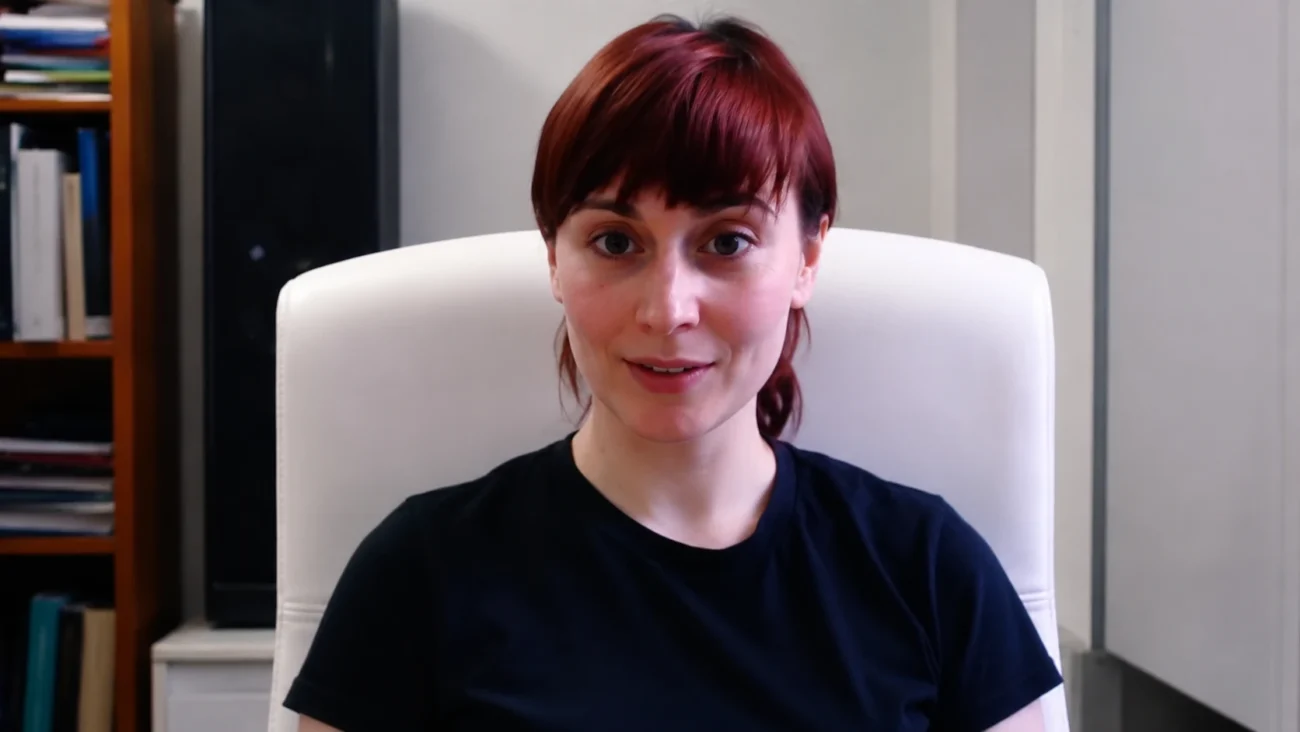
Yvette Amos did not become a public name through a planned campaign, a television career, or a celebrity launch. She became known because of a few seconds of live television during one of the strangest periods in modern public life. In January 2021, she appeared on BBC Wales Today to talk about unemployment during the Covid-19 pandemic, only for viewers to fixate on an adult item visible on a shelf behind her. The moment spread quickly online, but the person at the center of it remained far less understood.
What makes yvette amos an unusual biographical subject is the gap between public curiosity and public fact. Millions of people have seen or heard about the clip, but far fewer know why she was on television in the first place. The available record points to a woman in Wales whose name became attached to a viral lockdown-era mishap rather than to a sustained public career. Her story is less about fame than about what happens when an ordinary person is pulled into the machinery of internet attention.
Early Life and Family Background
Publicly verified information about Yvette Amos’s early life is limited. Unlike actors, politicians, athletes, or media personalities, she did not have a long public profile before her BBC Wales appearance. There are no widely established public records confirming her date of birth, childhood schools, early ambitions, or full family history. That absence should be treated with care, not filled with guesses.
Reports after the viral BBC Wales moment connected Amos to South Wales and identified her mother as Esther Williams. Some coverage described her family as taking the incident calmly rather than treating it as a scandal. Those reported comments helped soften the tone around the story, because they suggested that the people closest to Amos did not see the episode as something shameful. Even so, family details about a private person should not be stretched beyond what was publicly reported.
The strongest impression from the available record is that Amos was not someone seeking fame. She was a member of the public invited to speak about work and unemployment during a national crisis. That context matters because it places her in the world of ordinary people affected by pandemic disruption, not in the world of celebrity image management. Her name became widely known only after viewers turned away from the topic of the interview and toward the background of the frame.
Education and Professional Life
There is no complete, verified public biography of Yvette Amos’s education. Some public academic records list a Yvette Amos connected with Cardiff-based health research, including work related to alcohol intoxication management services and emergency care. Those records show professional involvement in research, but they do not provide a full personal history. A careful biography should recognize that connection without pretending it explains every part of her life.
The research associated with her name was serious work. Alcohol-related pressures on emergency departments are a real public health issue, especially in city centers at night. Studies in this area examine how services can respond to intoxicated people, reduce harm, and manage demand on hospitals. If the Yvette Amos in those records is the same person who appeared on BBC Wales, it adds a meaningful dimension to a public image too often reduced to one viral screenshot.
Some media coverage also described Amos as having worked part time in a bar while facing employment uncertainty during the pandemic. That detail fits the context of the BBC Wales discussion, which focused on unemployment and the effect of Covid restrictions on workers. Hospitality was among the sectors hit hardest by closures, reduced hours, and uncertainty. For many workers, the pandemic blurred the line between being employed, underemployed, furloughed, and financially insecure.
The BBC Wales Interview
Yvette Amos became widely known after appearing remotely on BBC Wales Today in January 2021. The interview took place during a period when television guests routinely appeared from bedrooms, kitchens, living rooms, and home offices. This was the era of video-call broadcasting, when private rooms became public spaces with very little warning. What once would have been a controlled studio appearance became a live glimpse into someone’s home.
Amos was there to discuss unemployment during the Covid-19 pandemic. That subject was urgent, especially in Wales, where restrictions affected hospitality, tourism, retail, and other public-facing work. People were losing jobs, waiting for businesses to reopen, or trying to survive on reduced income. Her appearance belonged to that serious public conversation.
But the interview was overtaken by a background detail. Viewers noticed what appeared to be an adult object on a shelf behind her. Screenshots moved across social media, and the clip became a joke shared far beyond the BBC Wales audience. Within a short time, the background had become more famous than anything said during the interview.
Why the Moment Went Viral
The clip spread because it arrived at exactly the right cultural moment for that kind of story. By early 2021, people had spent months peering into one another’s homes through Zoom, Teams, Skype, and television interviews. Bookshelves, wall art, pets, laundry, and family interruptions had all become part of the new visual language of remote work. Viewers had learned to scan the background almost as closely as they listened to the speaker.
The Yvette Amos clip also offered a quick comic release during a bleak period. Pandemic news was heavy, repetitive, and often frightening. A surprising object in the background of a serious news interview gave people something silly to share. That does not mean every joke was fair, but it helps explain the speed of the reaction.
Another reason the clip lasted is that it was easy to understand without context. A single screenshot carried the whole joke, which made it ideal for social media. People did not need to know the details of Welsh unemployment, the date of the broadcast, or Amos’s background. The image did all the work, and that is exactly how many viral moments detach from the people inside them.
The Serious Issue That Was Overshadowed
The most overlooked part of the yvette amos story is the reason she was on television. She appeared during a period of real economic anxiety, when the pandemic had disrupted work across the United Kingdom. Hospitality workers, casual staff, young workers, and people in service industries faced a particularly uncertain future. The interview was meant to give a human face to that pressure.
That seriousness was quickly buried under jokes. The public conversation moved from unemployment to embarrassment, from economic hardship to a visible household item. In a different media environment, Amos might have been remembered as one of many people describing the strain of the pandemic labour market. Instead, her name became attached to a background mishap.
This imbalance is what gives the story its lasting meaning. The clip is funny to many people, but the circumstances around it were not light. Amos had stepped forward to speak about a problem affecting millions. The internet, doing what it often does, chose the easiest part of the frame to share.
Public Image and Media Reaction
The media reaction to Yvette Amos was mostly framed as a light viral story. Articles described the object, quoted social media reactions, and presented the episode as a cautionary tale for remote interviews. The tone was often amused rather than hostile. Still, amusement can have a long afterlife when a private person’s name becomes searchable for years.
Amos herself did not appear to build a public brand from the attention. There is no clear record of her turning the moment into a media career, a campaign, or a recurring public role. That restraint is important. It suggests that the fame belonged more to the internet than to her.
The public image that remains is therefore incomplete. To many people, she is simply “the BBC Wales woman with the shelf.” That label is unfairly small, even if it is the reason most people know the name. A more accurate view recognizes her as a private person who briefly became public because of an accidental collision between home life, live news, and social media.
Family, Relationships, and Private Life
Yvette Amos’s private relationships are not widely documented in reliable public sources. There is no confirmed public record of a spouse, children, or romantic relationships. That silence should not be treated as mystery or invitation. For a person who did not seek fame, privacy is part of the story.
Family comments reported after the viral moment suggested a relaxed response rather than panic. Her mother was reported as saying she was not embarrassed and had not pressed her daughter about the object. That kind of reaction gave the episode a more human tone. It also undercut the idea that the moment needed to be treated as a scandal.
The lack of public detail about her personal life also protects the boundaries of the biography. Readers may be curious, but curiosity is not the same as public interest. Unless Amos chooses to speak about her relationships or family life herself, those areas should remain outside the frame. A responsible profile can say what is known without prying into what is not.
Money, Work, and Net Worth
There is no credible public estimate of Yvette Amos’s net worth. Any website claiming a precise figure without direct financial records should be treated with skepticism. She is not a celebrity with disclosed contracts, public company holdings, major endorsement deals, or known entertainment income. For that reason, assigning a number would be misleading.
Her income sources, based on public discussion around the time of the BBC Wales interview, appear to have been ordinary work rather than celebrity earnings. Some reports described her as connected to bar work and research. Those are real forms of employment, but they do not support public claims about wealth. The pandemic context suggests financial uncertainty was part of why she appeared in the news discussion at all.
The broader point is that the viral moment did not make Amos a known business figure. There is no evidence that she monetized the attention in a major way. Unlike influencers who turn viral clips into sponsorships or platforms, she seems to have remained largely outside the public economy of fame. That makes net worth claims not just unsupported, but beside the point.
Career and Public Contributions
Yvette Amos’s public career is difficult to summarize because most available attention focuses on one television appearance. Yet the research records associated with her name suggest involvement in public health work, especially around emergency care and alcohol-related services. That kind of work rarely produces celebrity recognition. It is practical, policy-adjacent, and often invisible to the general public.
If connected to Amos, that research background gives the story a sharper contrast. The viral internet version reduces her to a visual joke, while the professional record points toward serious work on public services. Health services research asks unglamorous but important questions about how systems function. It deals with real pressures on hospitals, staff, patients, and local communities.
The contrast also shows how public memory can distort scale. A brief television background detail became more widely known than years of professional or research activity. That is not because the joke mattered more, but because jokes travel faster than public health reports. In Amos’s case, the internet preserved the least representative part of the record.
Setbacks, Controversy, and Public Scrutiny
The Yvette Amos incident was not a controversy in the usual sense. There was no allegation of wrongdoing, no public misconduct, and no scandal involving public office or professional failure. It was a viral embarrassment, or at least it was treated that way by many viewers. The difference matters because not every widely discussed moment deserves the weight of a scandal.
What happened was closer to accidental exposure. A private object appeared in a public frame, and viewers reacted. Some people laughed with a sense of harmless absurdity, while others speculated about whether it had been staged. No reliable public evidence proved intention either way.
The scrutiny still had consequences. Even a light viral story can attach itself to a person’s name for years. Search results do not forget quickly, and a moment that passed in seconds can become the first thing strangers learn about someone. That imbalance is one of the quiet costs of internet fame.
Where Yvette Amos Is Now
There is no reliable, current public record showing exactly where Yvette Amos is now or what she is doing professionally. She has not maintained a widely visible public media profile connected to the viral BBC Wales moment. That makes it difficult to provide a current biography in the way one might for an actor, politician, or athlete. The honest answer is that she appears to have returned to private life.
That absence is not a failure of the story. In some ways, it is the point. Amos became widely known through circumstances she did not seem to invite, and then did not publicly convert that attention into a career. Many people who go viral accidentally do the same. They step back because the attention was never the goal.
For readers, the lack of a public update may feel unsatisfying. Search culture trains people to expect a complete answer: age, family, spouse, job, salary, home, recent photos. But not every person with a viral moment is a public figure in the fullest sense. In Amos’s case, the most respectful current status is also the most accurate: she is best understood as a private individual briefly caught in public attention.
Why Her Story Still Matters
Yvette Amos matters because her story captures a very specific kind of modern fame. It is accidental, visual, fast-moving, and detached from intention. She did not become known because of a planned performance. She became known because the internet noticed something in the background and refused to let it stay small.
The episode also marks a moment in pandemic culture. Remote work and remote broadcasting made people’s homes part of public life. The boundary between professional appearance and private space became unstable. Amos’s clip became one of the more memorable examples of what could happen when that boundary slipped.
There is also a lesson for journalism. A serious interview about unemployment turned into a viral item about an object on a shelf. That shift was predictable, but it was not neutral. It changed what people remembered, and it narrowed a person into a joke. A better telling restores the context without pretending the viral moment did not happen.
Frequently Asked Questions
Who is Yvette Amos?
Yvette Amos is a Welsh woman who became widely known after appearing on BBC Wales Today in January 2021. She was interviewed about unemployment during the Covid-19 pandemic. The interview went viral because viewers noticed an adult-looking item on a shelf behind her. Before that moment, she was not widely known as a public figure.
Why did Yvette Amos go viral?
She went viral because of a background detail during a remote television interview. Viewers spotted what appeared to be an adult object on a shelf behind her, and screenshots spread across social media. The moment became part of a larger wave of pandemic-era video-call mishaps. The attention quickly overshadowed the serious topic she had appeared to discuss.
What was Yvette Amos discussing on BBC Wales?
She was discussing unemployment during the Covid-19 pandemic. That subject was especially relevant at the time because restrictions had affected many workers and businesses. Hospitality, tourism, retail, and casual work were all under pressure. Her appearance was meant to speak to that wider economic uncertainty.
Is Yvette Amos a public figure?
Yvette Amos is best described as a private person who became briefly famous through a viral media moment. She was not a celebrity or established media personality before the BBC Wales interview. There is no strong evidence that she pursued fame after the clip spread. That distinction matters because private people deserve more care in how their stories are retold.
What is Yvette Amos’s net worth?
There is no credible public estimate of Yvette Amos’s net worth. Claims that assign her a specific fortune are not supported by reliable financial records. She is not known to have public entertainment contracts, major business holdings, or celebrity income streams. Any net worth figure should be treated as speculation unless it comes from verified records or direct disclosure.
Is Yvette Amos married?
There is no confirmed public information about Yvette Amos’s marital status. Reliable reports about the viral BBC Wales moment did not establish whether she has a spouse or children. Because she is not a career public figure, those details should remain private unless she chooses to share them. A biography should not invent personal relationships to satisfy curiosity.
What is Yvette Amos doing now?
There is no verified current public update on what Yvette Amos is doing now. She appears not to have turned the viral moment into a public career. That likely means she returned to private life after a burst of unwanted or unexpected attention. The most accurate answer is that her current status is not publicly confirmed.
Conclusion
Yvette Amos’s public story is short, but it says a great deal about the age that produced it. She appeared on television to discuss unemployment during a national crisis, and a detail in the background turned her into a viral name. That was not a traditional path to recognition. It was a collision between remote broadcasting, private space, and online humor.
The fairest way to remember her is not as a punchline, but as a person briefly caught in a strange media moment. The joke may explain why people search her name, but it does not define the whole person. The public record also points to work and life beyond the screenshot, even if much of that remains properly private.
Her story still matters because it reminds us how easily the internet can flatten a person into one image. It also reminds us that serious subjects can be pushed aside by whatever is easiest to share. In the end, yvette amos remains less a celebrity biography than a case study in accidental visibility, public curiosity, and the need for restraint when real people become memes.
