
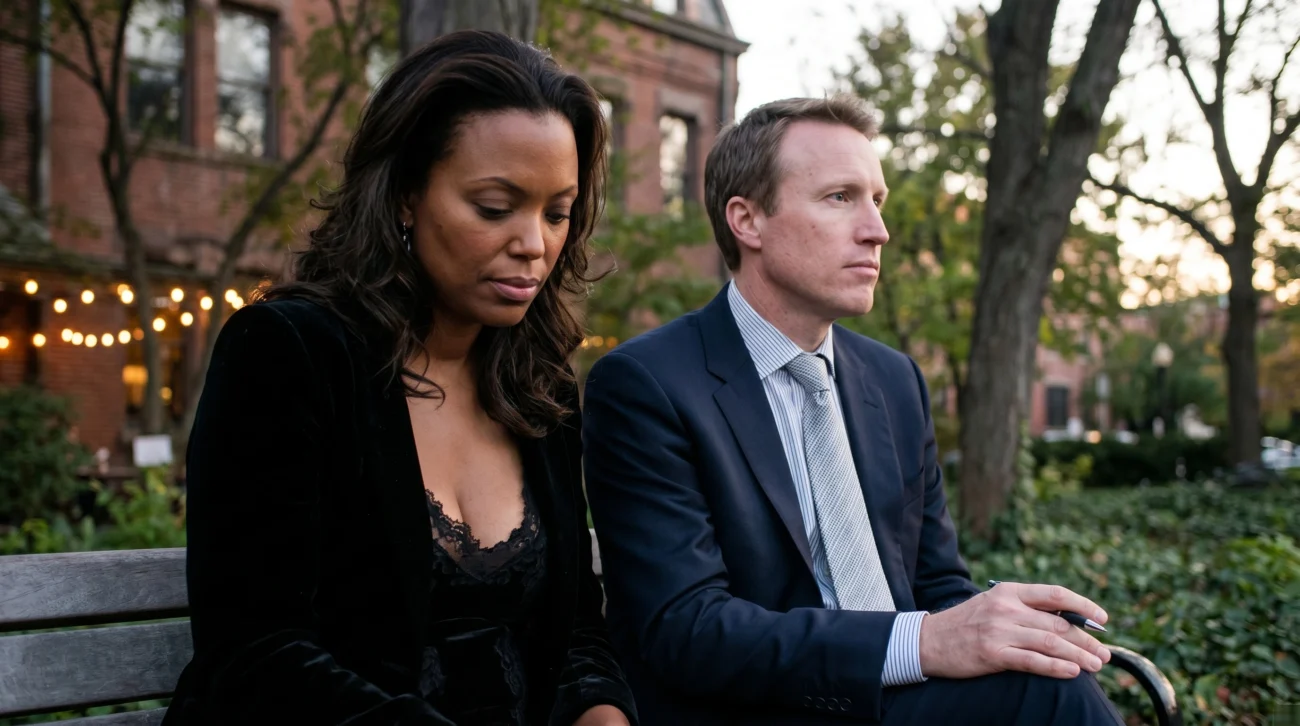
Jeff Tietjens is not a celebrity in the usual sense, and that is exactly why so much curiosity surrounds him. His name became widely searched because of his long marriage to actor, comedian, host, and director Aisha Tyler, yet he has never seemed eager to live in the glow of that attention. For more than two decades, he was part of Tyler’s private world while her public career expanded across television, film, stand-up comedy, voice work, and daytime talk. After their divorce became public, Tietjens became the subject of a familiar internet question: who is the man behind a famous former spouse?
The answer is more measured than many online profiles suggest. Jeff Tietjens is best known as an American lawyer and the former husband of Aisha Tyler. Public records identify him as Jeffrey Charles Tietjens, a Loyola Law School graduate who was admitted to the State Bar of California in 2000. His name appears most often in relation to his marriage, separation, divorce settlement, and the unusually respectful way Tyler spoke about him when their relationship ended.
That makes him an unusual subject for a biography. He is publicly known, but not publicly performative. He has a record, but not a long promotional trail. He is connected to fame, but he has mostly declined the usual pathways by which people turn that connection into personal visibility.
Early Life and Family Background
Many biography sites repeat claims about Jeff Tietjens’ early life, including details about his birthplace, ethnicity, and family history. Some say he was born in San Francisco and grew up in California, while others repeat similar claims without pointing to clear public records. Because Tietjens has not given a well-known public interview about his childhood, much of this material should be treated carefully. The most responsible way to describe his early life is to say that the specific details of his family background remain mostly private.
That privacy is not unusual for someone who became known through a spouse rather than through entertainment, politics, or public office. Unlike actors, athletes, and media figures, private attorneys do not usually leave behind a trail of interviews, magazine features, childhood profiles, or personal essays. Tietjens’ public identity begins most clearly with his education and legal career, not with a fully documented childhood narrative. Any article that claims to know intimate details about his parents, siblings, or upbringing without clear sourcing is likely stretching beyond the record.
Still, the broad outline is useful. Tietjens appears to have spent his adult professional life connected to California, especially through his legal education and bar admission. That places him in the same larger Los Angeles-centered world where Aisha Tyler’s entertainment career grew. Their later marriage would connect two very different public paths: his legal career, quiet and conventional, and her increasingly visible career in comedy and television.
Education and Legal Training
The strongest public record connected to Jeff Tietjens is his legal background. He attended Loyola Law School in Los Angeles, an institution known for producing attorneys who work across litigation, entertainment law, business, public interest, and government. Loyola’s location matters because Los Angeles is a city where law, media, and entertainment often overlap. For someone connected to a partner working in television and comedy, that world would have been close even if he did not seek attention from it.
Tietjens was admitted to the State Bar of California in June 2000. That admission indicates that he completed law school, satisfied the requirements for entry into the California bar, and became eligible to practice law in the state. California’s bar process is widely regarded as demanding, so this record establishes a real professional achievement rather than a vague biographical label. It is one of the clearest confirmed facts about him.
The public bar record also matters because it helps separate fact from repetition. Many short online biographies call him an attorney but do not explain the basis for that claim. In this case, the basis is not rumor or association with a famous spouse; it is a professional registration record. That distinction is important because Tietjens’ public profile has often been shaped by secondhand coverage rather than by his own public statements.
Career as an Attorney
Jeff Tietjens’ career is usually described in broad terms as a legal career, but the public record does not support many detailed claims about specific cases, clients, or legal specialties. Some online profiles describe him as a successful lawyer, and that may be fair in a general sense, but the details are not widely documented. There is no strong public trail of famous trials, public legal campaigns, television appearances as a legal analyst, or elected legal office. His career appears to have been professional rather than celebrity-facing.
That makes his biography different from that of many people attached to Hollywood. Some spouses of entertainers become managers, producers, executives, or visible partners in a public brand. Tietjens did not seem to take that route. His legal identity existed mostly outside the entertainment press until his marriage and divorce made him searchable.
At a practical level, this explains why readers find so many incomplete accounts of him. A private lawyer’s work often happens through filings, contracts, client relationships, and closed professional networks rather than through publicity. Unless a lawyer handles public cases or gives interviews, there may be little for general readers to see. Tietjens’ professional life appears to have followed that lower-profile pattern.
His California bar status later changed, and the public record has listed him as resigned rather than active. That does not by itself imply scandal or misconduct. It simply means that descriptions of him as a current practicing California lawyer should be handled with care. The most accurate phrasing is that he was admitted to practice law in California and is best described today as a former California-admitted attorney unless new verified information shows otherwise.
Meeting Aisha Tyler
Jeff Tietjens is most widely known because of his marriage to Aisha Tyler. Reports have described the couple as college sweethearts, a phrase that gives their story a long arc before either became the subject of public curiosity. Their relationship began before Tyler became a familiar television presence, before her years on daytime talk, and before her voice and comedy work reached a wide audience. That timing matters because it suggests the relationship was not born inside celebrity culture.
Tyler’s later public comments about Tietjens support the idea of a deep, formative bond. She described him with affection even after the relationship ended, making clear that the marriage had shaped her life in profound ways. Those remarks stood out because celebrity divorces are often framed as conflict, blame, or image management. Tyler instead spoke about love, pain, and the difficulty of two people moving in different directions.
Their relationship also reflects a common but rarely easy pattern. One partner’s career becomes increasingly public, while the other remains largely private. That imbalance can put pressure on any marriage, though there is no verified evidence that fame itself caused their split. What can be said is that Tyler’s visibility made the end of the marriage a public story, while Tietjens’ private nature left much of his side unknown.
Marriage to Aisha Tyler
Jeff Tietjens and Aisha Tyler married in 1994. Their marriage lasted more than two decades, which is a significant span by any standard and an especially long one in the context of entertainment-world scrutiny. During those years, Tyler built a wide-ranging career that included stand-up comedy, acting roles, hosting work, voice acting, directing, and writing. Tietjens, meanwhile, remained largely out of public view.
The couple did not have children together. Tyler later spoke publicly about fertility struggles during their marriage, a subject that brought unusual emotional openness to a daytime television setting. She described the pain of trying to conceive and the decision to stop pursuing biological parenthood after a difficult process. Those disclosures became part of the public understanding of the marriage, though they should not be used to explain the divorce without evidence.
Their marriage became visible mostly through Tyler’s work and her willingness to discuss parts of her personal life. Tietjens himself did not become a recurring red-carpet personality or public commentator. That asymmetry is one reason the public record about him feels incomplete. The marriage was real and long, but its details were not offered up as ongoing entertainment.
By the time their separation became public, the relationship had already carried decades of history. That made the divorce feel less like a celebrity headline and more like the ending of a private partnership that happened to involve a famous person. Tyler’s remarks reinforced that sense. She spoke not as someone trying to win a public argument, but as someone grieving the end of a meaningful chapter.
Aisha Tyler’s Career During Their Marriage
Understanding Jeff Tietjens’ public relevance requires understanding Aisha Tyler’s rise. Tyler became known for her sharp comic timing, intelligence, and ability to move easily between comedy, drama, hosting, and voice performance. She appeared on shows such as “Friends,” “CSI,” “Criminal Minds,” and “Archer,” where she voiced Lana Kane. She also became a co-host of “The Talk,” giving her a daily platform and a stronger connection with daytime audiences.
During much of that professional climb, Tietjens remained in the background. That position can be hard to define from the outside. A spouse may provide emotional support, practical stability, or simply a private home base, but those contributions are rarely documented in public records. Tyler’s later comments suggested that Tietjens had mattered deeply to her life, even if he was not part of the machinery of her public career.
The contrast between their roles helped shape later interest in him. She was recognizable and quotable; he was not. She had interviews, credits, and public appearances; he had a legal record and a private life. That gap created the conditions for speculation after their divorce, because readers wanted a fuller story than the public record could provide.
Separation and Divorce
The couple separated in January 2015 after more than 20 years of marriage. Tietjens filed for divorce in 2016, citing irreconcilable differences, the standard legal language used in many no-fault divorce filings. Their divorce was finalized in 2017. The timeline is important because it shows that the end of the marriage was not an abrupt public eruption, but a process that unfolded over time.
Tyler addressed the separation publicly on “The Talk,” where she became emotional while discussing the end of the relationship. She said she did not view the marriage as a failure and spoke about Tietjens with tenderness. Those comments shaped the public understanding of the split. They suggested grief, respect, and acceptance rather than public hostility.
The divorce drew wider attention because of the financial settlement. Reports said Tyler agreed to pay spousal support to Tietjens, with figures described as substantial. In celebrity coverage, that became the headline. But the more meaningful part of the story may be the way both the legal process and Tyler’s public remarks avoided turning the marriage into a spectacle.
Long marriages often end with difficult financial arrangements, especially when one spouse has much higher public earnings. California family law allows for spousal support based on many factors, including the length of the marriage, earning capacity, standard of living, and financial need. The fact that Tyler paid support was treated by some readers as unusual, but legally it was not strange simply because she was the wife. The higher-earning spouse can be ordered or agree to pay support regardless of gender.
Divorce Settlement and Money
Reports about the divorce settlement said Tyler was required to pay $31,250 per month in spousal support for four years, a total of $1.5 million. Other coverage described the broader settlement as roughly $2 million after including additional obligations. Reports also said Tyler had to maintain a life insurance policy for a period connected to the agreement. These numbers became central to public interest in Tietjens because they were concrete, searchable, and easy to repeat.
But the settlement should be read carefully. It does not prove that Tietjens had no income, that Tyler was punished, or that one person was to blame for the breakup. Spousal support in a long marriage is often part of a negotiated resolution, especially when spouses have different earning histories. The court’s role is not to write a moral judgment on the marriage but to settle legal and financial obligations.
The couple’s property was also part of the larger financial story. Reports referred to real estate connected to the marriage, including a Hollywood Hills home that had been sold before the final settlement coverage. Property division often matters as much as monthly support in long marriages, but readers tend to remember the monthly dollar amount. That selective memory can distort the scale and meaning of a divorce agreement.
As for Jeff Tietjens’ personal net worth, reliable public information is limited. Many websites assign him estimated net worth figures, often in the millions, but those figures are rarely backed by transparent evidence. A fair biography should say that his wealth is not publicly confirmed. His known financial profile includes his legal career and the reported divorce settlement, but that is not enough to calculate his current assets.
Public Image and Media Attention
Jeff Tietjens’ public image is shaped mostly by absence. He is known because of a famous marriage, but he has not appeared to court fame himself. That absence has made him a blank space for internet biographies, which often fill the gap with repeated claims. The result is a public image built more from search demand than from interviews, public appearances, or self-presentation.
This can create a misleading impression. A reader might assume that because many articles exist about Tietjens, a large public record must exist as well. In reality, much of the coverage circles the same handful of facts: his legal background, marriage to Tyler, divorce filing, settlement, and low profile afterward. The repetition makes the story seem fuller than it is.
His restraint is also part of what makes him interesting. In an age when proximity to fame can become a career, Tietjens did not seem to convert the divorce into a media identity. There were no major tell-all interviews, public feuds, or regular appearances built around his former marriage. That quiet approach may be the most revealing thing about how he handles attention.
For readers, that means the best portrait of Tietjens must be modest in its claims. He can be described as private, educated, legally trained, and publicly connected to Tyler through a long marriage. He should not be turned into a celebrity personality without evidence. The truth is, his public image is defined by what he has chosen not to do as much as by what is known.
Children and Family Life
Jeff Tietjens and Aisha Tyler did not have children together. Tyler’s public comments about infertility gave audiences a rare look at one of the most painful private issues the couple faced. She described the emotional cost of fertility struggles and the difficult decision to stop trying to have biological children. That moment resonated with viewers because it was honest without being sensational.
The topic has to be handled with care. Infertility is often used by gossip coverage as a dramatic explanation for later marital trouble, but there is no confirmed basis for saying it caused the divorce. Relationships end for many reasons, and the private causes of this marriage ending remain known only to the people involved. Tyler’s own remarks after the split were not accusatory and did not reduce the marriage to a single issue.
Tietjens’ broader family life is not well documented. There is no confirmed public information about children from another relationship, a later spouse, or a remarriage. Some sites speculate about his current personal life, but responsible biography writing should not treat unsourced claims as fact. His family story, beyond his marriage to Tyler, remains largely private.
That privacy is important because it keeps the article grounded. Public curiosity does not create public knowledge. The most respectful account recognizes the emotional parts of the story that have been shared while leaving the rest alone.
Current Status and Life After Divorce
After the divorce, Jeff Tietjens largely disappeared from public entertainment coverage. That is not a dramatic disappearance; it is what often happens when a private person is no longer directly tied to an active celebrity storyline. His name still appears in search results because the divorce remains part of Tyler’s biography and because readers continue to look up the settlement. But there is little verified evidence of a public career shift, media project, or new public role.
His legal status has also changed from the period when he was commonly described as a California attorney. Public bar records have listed him as resigned, meaning current articles should avoid saying he is actively practicing in California unless there is separate verified evidence. That change does not erase his legal education or bar admission. It simply updates the professional description.
As for where he lives now, the public record is not enough to make confident claims about his private residence or daily life. Some online profiles mention locations, but many do so without clear support. A mailing address or old professional listing should not be treated as a window into someone’s personal life. The safest and fairest statement is that he appears to live privately and has not maintained a high public profile after the divorce.
That low profile has kept him from becoming a recurring figure in celebrity culture. It has also made him harder to write about, because the usual biography tools are missing. There are no recent promotional interviews to parse, no social-media persona to track, and no obvious public campaign to follow. In this case, silence is not a mystery to solve; it is part of the biography.
What People Often Get Wrong About Jeff Tietjens
One common mistake is treating Jeff Tietjens as famous in the same way Aisha Tyler is famous. He is known to the public mostly because of their marriage, not because he built a large public career. That does not make him unimportant, but it does change how his story should be told. He is a private professional whose name became attached to a public figure’s life story.
Another mistake is presenting exact personal details without explaining their source. Birth dates, family claims, and net worth numbers often circulate without clear documentation. Some may be correct, but responsible writing cannot treat them as settled without support. In a biography, precision matters more than volume.
The divorce settlement is also often misunderstood. Some coverage frames the money as the whole story, as if the marriage can be reduced to a monthly support amount. That misses the length of the relationship, the legal context, and Tyler’s own public respect for Tietjens. A settlement is a legal resolution, not a full emotional history.
A final mistake is assuming that Tietjens’ privacy means something negative. There is no need to read scandal into his lack of public presence. He may simply prefer a life away from cameras, interviews, and social commentary. For someone who never sought fame directly, that is a reasonable path.
Legacy and Cultural Interest
Jeff Tietjens does not have a public legacy in the conventional celebrity sense. He is not known for albums, films, elections, public speeches, or famous legal arguments. His place in public memory comes from a long marriage to a well-known performer and from the way that marriage ended. That may sound narrow, but it still says something about how modern fame works.
People connected to celebrities often become searchable even when they remain private. Their names turn into public questions because readers want to understand the full human story around the person they recognize. Tietjens became part of that search pattern, especially because Tyler spoke about him with such care. He became a figure of curiosity not through scandal, but through proximity to a public heartbreak.
There is also a broader cultural reason his story holds attention. The divorce challenged simple assumptions about gender, money, and marriage. Tyler was the higher-profile spouse and reportedly paid substantial support, which made the settlement stand out in entertainment media. But behind that headline was a more ordinary legal reality: long marriages can create financial obligations that do not fit stereotypes.
In that sense, Tietjens’ story is less about fame than about the limits of public knowledge. Readers can know the dates, the legal status, the marriage, and the reported settlement. They cannot know every private conversation or emotional turn. A good biography respects that line.
Frequently Asked Questions
Who is Jeff Tietjens?
Jeff Tietjens is an American lawyer best known as the former husband of Aisha Tyler. Public records identify him as Jeffrey Charles Tietjens, a Loyola Law School graduate who was admitted to the State Bar of California in 2000. He became widely searched after his divorce from Tyler drew media attention.
He is not a celebrity performer or public media figure in his own right. Most of what is publicly known about him comes from legal records and reporting on his marriage and divorce. That makes careful fact-checking especially important because many short online profiles repeat unsupported details.
What is Jeff Tietjens famous for?
Jeff Tietjens is famous mainly for his marriage to Aisha Tyler and the public attention surrounding their divorce. Tyler is a well-known actor, comedian, host, director, and voice performer, which made their long relationship part of entertainment coverage. Tietjens himself has kept a much lower public profile.
His legal career is also part of his biography, but it is not what made him widely known to general readers. He became a public-search figure because of his connection to Tyler. That distinction helps explain why verified information about him is limited.
Was Jeff Tietjens married to Aisha Tyler?
Yes, Jeff Tietjens was married to Aisha Tyler. They married in 1994 and separated in 2015 after more than two decades together. Tietjens filed for divorce in 2016, and the divorce was finalized in 2017.
Their marriage was often described with affection after it ended. Tyler publicly said she did not see the relationship as a failure and spoke warmly about Tietjens. That tone set their split apart from many celebrity divorces that become public fights.
Did Jeff Tietjens and Aisha Tyler have children?
Jeff Tietjens and Aisha Tyler did not have children together. Tyler publicly discussed fertility struggles during their marriage and described the decision to stop trying to conceive biological children. Her comments were widely covered because they were unusually open and personal.
Those fertility struggles should not be presented as the confirmed cause of the divorce. The private reasons a marriage ends are usually more complex than any single public detail. Tyler’s own comments after the separation were respectful and did not assign blame.
What is Jeff Tietjens’ net worth?
Jeff Tietjens’ exact net worth is not publicly confirmed. Many websites publish estimated figures, but most do not show reliable financial records or clear sourcing. Those numbers should be treated as guesses rather than facts.
The best-known financial information connected to him is the reported divorce settlement with Aisha Tyler. Reports said Tyler agreed to pay substantial spousal support after their long marriage. That settlement does not provide enough information to calculate Tietjens’ current wealth.
Is Jeff Tietjens still a lawyer?
Jeff Tietjens was admitted to the State Bar of California in 2000 after attending Loyola Law School. Public bar records later listed his status as resigned, so current descriptions should avoid calling him an active California lawyer without updated proof. The most accurate description is that he is a former California-admitted attorney.
That status does not take away from his legal education or prior admission. It simply reflects the current public record. Because licensing status can change, the official bar record is the best place to verify any present-tense claim.
Where is Jeff Tietjens now?
Jeff Tietjens appears to live a private life away from regular media attention. After his divorce from Aisha Tyler, he did not become a frequent public commentator or celebrity personality. There is no widely verified information about a new public career, remarriage, or major media project.
That privacy should be respected rather than treated as a mystery. Some online profiles make claims about his current location or relationships, but many do not provide solid support. The most honest answer is that his current private life is not well documented in reliable public sources.
Conclusion
Jeff Tietjens’ biography is not the story of a man chasing fame. It is the story of a private professional whose name became public because of love, marriage, divorce, and proximity to a famous former spouse. The facts that can be verified are meaningful, but they are not endless. He was legally trained, admitted to the California bar, married to Aisha Tyler for more than 20 years, and later part of a widely reported divorce settlement.
What makes his story memorable is the restraint around it. Tyler spoke about him with warmth after the marriage ended, and Tietjens did not appear to turn the moment into a public platform. That quietness gives the story a different shape from the usual celebrity breakup narrative. It asks readers to accept that not every public name belongs to a public life.
The most accurate portrait of Jeff Tietjens is grounded rather than dramatic. He is a former California-admitted attorney, Aisha Tyler’s ex-husband, and a figure whose private choices have limited what the public can fairly know. In a culture that often rewards exposure, his low profile may be the clearest statement he has made.
