
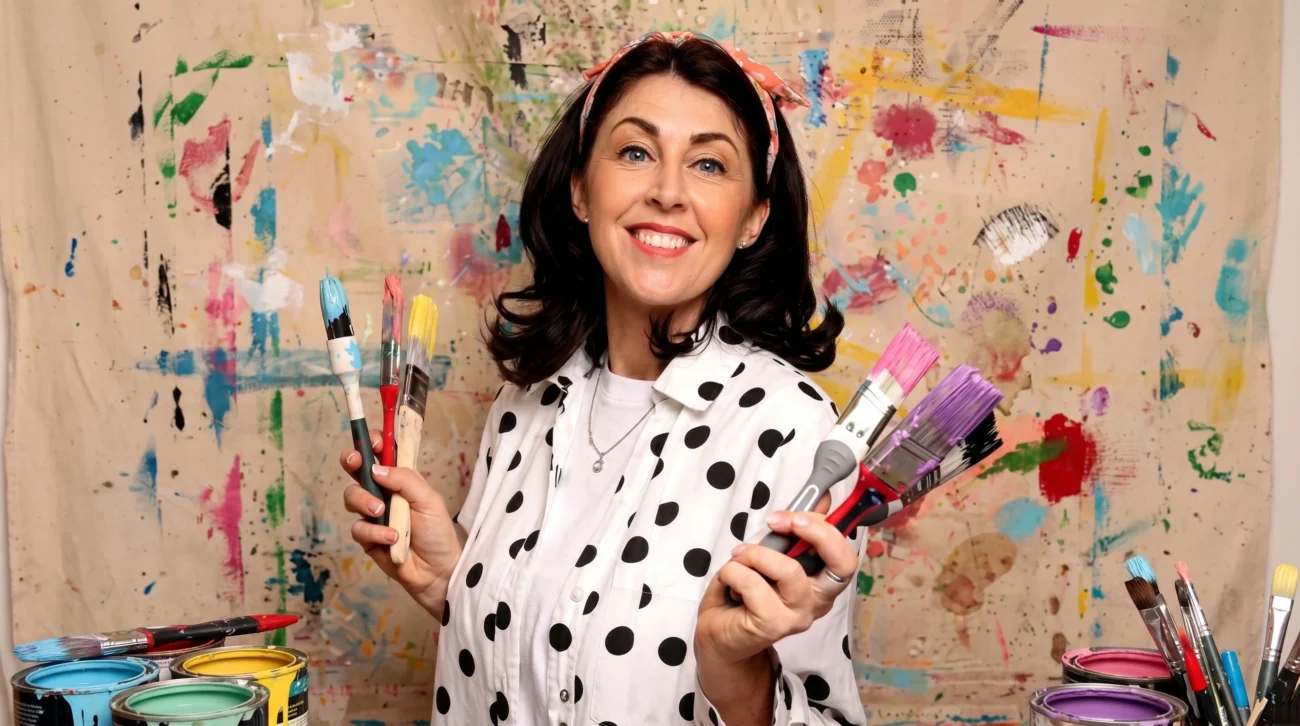
Gemma Longworth built her public life around things other people might overlook: a worn chair, an old jacket, a piece of furniture left behind, a child who needs a way to express grief without having to explain everything in words. To television viewers, she is best known as the Liverpool artist and upcycler from Channel 4’s Find It, Fix It, Flog It. But her story reaches beyond the workshop table and the TV studio. Longworth’s career has become a quietly distinctive mix of craft, sustainability, teaching, bereavement support, and public-facing creativity.
Her appeal is easy to understand. She makes repair feel possible rather than precious, and she talks about creativity as something ordinary people can actually use. In an era when many public figures build brands around polish, Gemma Longworth’s work is rooted in materials, memory, patience, and care. Her biography is not a conventional celebrity story, but it is a revealing one: an artist turning practical skill into television work, community projects, a book, and a wider message about healing through making.
Early Life and Family
Gemma Catherine Longworth is a British artist, presenter, upcycler, workshop leader, and author from Liverpool. Public records list her date of birth as May 1984, which makes her 42 as of May 2026. Much of her public identity remains tied to Merseyside, not only as a place of origin but as the base from which many of her creative and community projects have grown. Unlike many television personalities, she has not built her profile on oversharing private family details, so the most responsible account of her life starts with what is publicly known.
One deeply personal part of Longworth’s background has been shared in connection with her bereavement work. She lost her younger brother Sean in a car accident when he was nine years old, a loss that later shaped her understanding of grief, siblings, and the need for children to have safe creative spaces. That experience has been discussed in the context of her work with bereaved young people rather than as a piece of celebrity confession. It helps explain why her public work often treats craft as more than decoration.
Longworth’s family life beyond that is not widely documented in reliable public sources. Many online searches about her focus on whether she is married, whether she has children, or who her partner is, but those details are not consistently confirmed by primary sources. A careful biography should not pretend certainty where the public record is thin. What is clear is that family, loss, and memory have all influenced the kind of creative work she chooses to do.
Education and First Ambitions
Longworth’s route into public life began with formal art training rather than television. She studied at the City of Liverpool College and completed a Foundation Diploma in Art and Design before continuing into higher education. She later studied Drawing and Applied Arts in Bristol and completed a master’s degree in textiles in Manchester. That educational path gave her the technical and conceptual grounding that still shows in her work.
Her early ambitions appear to have been practical as much as artistic. After university, she did not step straight into an established creative job with a clear ladder in front of her. Instead, like many artists, she had to make her own opportunities in a field where talent alone rarely guarantees paid work. That pressure became one of the defining forces in her career.
What makes Longworth’s early story interesting is that she did not wait for permission to become useful. She began volunteering at Alder Hey Children’s Hospital, delivering art and craft workshops and learning how creative activity could change the energy of a room. That work mattered because it placed her art practice in direct contact with children, families, stress, illness, and care. It also gave her experience that later became central to her public identity.
The Button Boutique and the Liverpool Workshop Years
In 2011, Longworth launched The Button Boutique, a creative workshop and events business that became an early foundation for her professional life. The project grew from a simple idea: offering hands-on art and craft sessions for people who wanted to make things, celebrate occasions, or learn new skills in a relaxed setting. It was not a grand media launch, and that is part of its importance. It began as a working artist’s answer to real demand.
The Button Boutique operated in Liverpool’s Baltic Creative area, a district known for independent businesses, studios, and creative start-ups. Longworth first worked from smaller spaces and later moved into a larger site as the project expanded. Her workshops covered art, craft, styling, handmade products, and creative parties. The business showed her ability to turn craft from a personal skill into a public experience.
Those years also helped shape the tone that later made her effective on television. Running workshops requires more than being good with materials. It means reading a group, explaining steps clearly, encouraging nervous beginners, adjusting to different ages and abilities, and keeping the atmosphere warm without losing structure. Those are the same skills that make a craft presenter feel trustworthy on screen.
Breakthrough on Television
Longworth became more widely known through Channel 4’s Find It, Fix It, Flog It, a restoration and upcycling programme built around neglected objects and their possible second lives. The show’s appeal rests on transformation, but not the glossy kind that hides the work. Viewers watch old, unwanted, or damaged items move through repair, redesign, and resale. Longworth’s role as a furniture upcycler fitted naturally with the skills she had already built.
Her television presence works because it feels grounded. She is not presented as a distant design authority telling people what to buy. She appears as someone who understands materials, colour, texture, and the emotional pull of objects that might otherwise be thrown away. That makes her especially appealing to viewers who want inspiration without feeling judged for starting small.
For Longworth, television did not replace her earlier work; it gave it a larger stage. The same principles behind her workshops appear in her screen projects: look closely, try something practical, accept that repair takes effort, and let old things carry new meaning. In a crowded field of home and lifestyle television, that consistency has helped her stand out. She has become associated with upcycling that feels accessible, not intimidating.
Upcycling as a Public Identity
Upcycling is often described too simply as making old things look nicer. Longworth’s work shows why the practice has a wider appeal. A successful upcycling project involves judgement: deciding what is worth saving, what needs repair, what should be changed, and what history should remain visible. It is part design, part craft, part thrift, and part emotional intelligence.
That explains why Longworth’s public image has grown at a time when repair culture feels newly relevant. Many households are thinking more carefully about cost, waste, and the environmental price of buying new. Upcycling offers a practical response to those pressures, but it also gives people a sense of agency. A person who restores a chair or revives a cabinet is not just saving money; they are changing their relationship with what they own.
Longworth’s style is not about perfection for its own sake. Her work often carries the message that a project can be useful and beautiful without looking factory-made. That approach matters because beginners are often discouraged by the idea that craft requires flawless taste or expensive tools. Longworth’s career argues for a more forgiving standard: start with what you have, learn by doing, and let the finished object show the hand that made it.
Hidden Gems and Creative Support
One of the most meaningful chapters in Longworth’s career is Hidden Gems, the creative support service associated with her current work. Hidden Gems offers art and craft workshops for groups, events, smaller sessions, and one-to-one settings. The work includes creative wellbeing, bereavement support, sustainability, confidence-building, and team-based activity. It brings together the different strands of Longworth’s life more clearly than any single television appearance could.
Gemma’s Hidden Gems CIC was incorporated in October 2024 as a Community Interest Company. That structure matters because it shows a move from individual creative practice into a more formal community-facing organisation. Hidden Gems is not just a name attached to craft sessions; it has become part of Longworth’s effort to give creative work a social purpose. Its activities include painting, drawing, decoupage, journaling, memory boxes, collage, furniture upcycling, recycled artwork, murals, jewellery making, and clothing customising.
The emotional centre of this work is the idea that making can create room for feeling. That does not mean craft replaces therapy, medical care, or specialist bereavement support. It means creative activity can help people express themselves when ordinary conversation feels too hard. Longworth’s strongest public contribution may be her ability to make that idea feel practical rather than abstract.
Work with Bereaved Children and Young People
Longworth’s work with bereaved children gives her profile an added depth. Through projects connected with organisations such as Alder Hey and Claire House Children’s Hospice, she has supported young people affected by death, grief, and family illness. These sessions are not about producing perfect artwork. They are about giving children and siblings a space where they can make, talk, remember, or simply be quiet while doing something with their hands.
Alder Hey has described Alder’s Hidden Gems as a collaboration between Gemma Longworth and The Alder Centre. The group is aimed at children and young people affected by the death of a child, with activities that may include visual arts, crafts, music, dance, gardening, fashion, and upcycling. That range reflects a flexible approach to grief support. Different children need different routes into expression, and creative sessions can offer more than one doorway.
Longworth’s personal experience of sibling bereavement gives this work a particular weight. She has spoken publicly in connection with her brother Sean’s death and the importance of giving siblings their own space. That background does not make her work valuable by itself, but it does help explain the care with which she approaches it. Her public story suggests that grief did not simply become a biographical detail; it became part of the reason she built spaces for others.
Craft Your Cure and the Move into Publishing
In 2025, Longworth’s work reached a new audience through her book Craft Your Cure: 25 craft and upcycling projects to heal and bring joy. The title reflects the language she has increasingly used around creativity, recovery, and everyday emotional care. The book brings together craft, upcycling, repair, and personal reflection in a format readers can use at home. It also marks her shift from workshop leader and television contributor into author.
The book includes projects such as paper craft, cushions, clay pinch pots, doodling, knitting, mending clothes, and furniture repair or upcycling. Its strength lies in connecting modest activities with emotional purpose. A daily doodle, a repaired garment, or a handmade object may sound small, but small tasks can matter when someone is anxious, grieving, lonely, or overwhelmed. Longworth’s book invites readers to see craft as a steadying practice rather than a performance.
The title should be understood with care. No responsible reading of the book would suggest that craft literally cures grief, trauma, or mental illness. Its value is more grounded: creative projects can offer focus, rhythm, comfort, memory, and a sense of completion. That is a more honest promise, and it fits the rest of Longworth’s career.
Marriage, Children, and Private Life
Public curiosity about Gemma Longworth’s private life is understandable, especially because television can make viewers feel they know a presenter personally. Search interest around her often includes questions about marriage, children, family, and home life. The available reliable record, though, does not confirm many of those details in a way that should be repeated as fact. Longworth appears to have kept much of her personal life outside the centre of her public profile.
That choice deserves respect. Not every public figure owes the audience a full account of their domestic life, and Longworth’s public reputation rests mainly on her work rather than her relationships. Her story is strongest when told through her art practice, community projects, television role, and creative support work. Those are the areas where the record is clear and the public interest is strongest.
There is also a journalistic reason to be careful. Many minor-celebrity biography pages repeat claims from one another without showing where the information first came from. In Longworth’s case, those claims can include personal relationships and financial estimates that are difficult to verify. A serious biography should not turn uncertainty into fact just because readers are searching for it.
Business Ventures and Net Worth
Longworth’s income appears to come from several professional streams: television work, creative workshops, public and community projects, business activity, commissions, and publishing. She has been associated with The Button Boutique, Hidden Gems, Gemma Longworth Creative Ltd, and Gemma’s Hidden Gems CIC. Public company records confirm formal business appointments, but they do not provide a simple picture of personal wealth. That means any exact net worth claim should be treated cautiously.
There is no credible public net worth figure for Gemma Longworth. Some websites may publish estimates, but those figures usually lack sourcing and should not be repeated as established fact. A more realistic financial picture is that Longworth has built a portfolio career, the kind many artists and presenters depend on. Such careers can include strong visibility without the enormous earnings sometimes assumed by casual viewers.
Her business story is still significant even without a reliable wealth estimate. Longworth has managed to turn craft expertise into multiple forms of work, from television and teaching to community interest activity and book publishing. That kind of career requires adaptability, not just talent. It also reflects a modern creative economy in which artists often survive by combining public profile, practical services, and mission-led projects.
Public Image and Cultural Influence
Gemma Longworth’s public image is warm, practical, and emotionally grounded. She comes across less as a celebrity designer than as a working artist who has learned how to translate craft for many different audiences. That distinction matters because it shapes how viewers and participants respond to her. People are more likely to try something creative when the person teaching them seems approachable.
Her influence sits in a specific but meaningful corner of British culture. She belongs to the world of restoration television, sustainable interiors, craft workshops, and arts-based wellbeing. These may not attract the same attention as film or music fame, but they touch people’s daily lives directly. A restored cabinet, a memory box, or a repaired jacket can carry personal meaning in a way mass-produced objects rarely do.
Longworth also represents a broader shift in how society values making. For years, craft was often dismissed as quaint, domestic, or decorative. Her career helps place it in a different frame: as a skill, a business, a television subject, a sustainability practice, and a support tool. That does not make every craft session profound, but it does show why her work connects with people beyond hobby circles.
Setbacks and Turning Points
Longworth’s life includes a profound personal loss in the death of her younger brother Sean. That experience is the clearest publicly known turning point in her personal story, especially because it later shaped her work with bereaved siblings and young people. It is important not to reduce a person to grief, but it is equally important not to ignore the role grief has played in her public mission. Longworth’s creative support work carries the mark of someone who understands that loss can change the shape of a family.
Professionally, another turning point came after university, when she had to create her own opportunities rather than wait for a conventional job to appear. The Button Boutique grew from that moment of uncertainty. What could have been a career dead end became a business, a workshop practice, and eventually part of the foundation for television and wider public work. Many creative careers are built in exactly that way, through improvisation before recognition.
The move into Hidden Gems marked another shift. It took the personal, educational, and public parts of Longworth’s work and placed them into a clearer community structure. That step suggests a career becoming more intentional with time. Rather than leaving craft as entertainment alone, Longworth has increasingly used it as a tool for support, memory, and connection.
Where Gemma Longworth Is Now
As of 2026, Gemma Longworth remains active as an artist, upcycler, presenter, author, and creative support practitioner. Her current public work is closely tied to Hidden Gems, creative wellbeing projects, upcycling, and the continuing visibility of her television profile. The publication of Craft Your Cure has also given her a durable platform beyond workshops and TV episodes. It allows her approach to reach readers who may never attend a session in person.
Her work now seems to sit at the meeting point of three public conversations. One is sustainability, especially the desire to repair and reuse rather than discard. Another is mental wellbeing, particularly the search for accessible forms of support that feel less clinical and more human. The third is the continuing popularity of practical television, where viewers want expertise they can take back into their own homes.
Longworth’s future public standing will likely depend on how these strands develop. She is not simply a presenter waiting for the next format. She has a body of work that can expand through books, workshops, charities, schools, community partnerships, and digital projects. That gives her career a sturdier base than fame alone.
Frequently Asked Questions
Who is Gemma Longworth?
Gemma Longworth is a British artist, upcycler, television presenter, author, and creative workshop leader from Liverpool. She is best known to many viewers for her work on Channel 4’s Find It, Fix It, Flog It, where she appears as a furniture upcycler. Her wider career includes The Button Boutique, Hidden Gems, creative bereavement support, and the 2025 book Craft Your Cure.
How old is Gemma Longworth?
Public company records list Gemma Catherine Longworth’s date of birth as May 1984. That makes her 42 as of May 2026. Some websites may publish exact birth dates, but the most reliable public record commonly available gives the month and year rather than a full date.
What is Gemma Longworth known for?
Gemma Longworth is known for upcycling, furniture restoration, creative workshops, and her role on Find It, Fix It, Flog It. She is also known for using art and craft in wellbeing and bereavement support settings. Her public work combines practical making with a strong interest in sustainability, memory, and emotional care.
Is Gemma Longworth married?
Gemma Longworth has not made detailed personal relationship information a central part of her public profile. Reliable public sources do not consistently confirm her marital status or family arrangements. For that reason, responsible biographies should avoid presenting unsourced claims about her marriage, partner, or children as fact.
What is Gemma Longworth’s net worth?
There is no reliable confirmed net worth figure for Gemma Longworth. Her income likely comes from a mix of television work, creative workshops, commissions, business activity, community projects, and publishing. Any exact figure found on unsourced biography sites should be treated as an estimate at best, not a verified fact.
What is Hidden Gems?
Hidden Gems is Gemma Longworth’s creative support service, linked to workshops, wellbeing projects, bereavement support, sustainability, and upcycling. Gemma’s Hidden Gems CIC was incorporated in October 2024 as a Community Interest Company. The work reflects Longworth’s belief that creative activity can help people build confidence, express emotion, and find moments of calm.
Has Gemma Longworth written a book?
Yes, Gemma Longworth wrote Craft Your Cure: 25 craft and upcycling projects to heal and bring joy. The book was published in 2025 and includes creative projects such as paper craft, clay work, doodling, knitting, mending, and furniture upcycling. It extends her workshop approach into a form readers can use privately at home.
Conclusion
Gemma Longworth’s biography is not the story of instant fame. It is the story of a working artist who built a public career by staying close to practical creativity. From Liverpool workshops to television restoration, from upcycled furniture to bereavement support, her work has followed a clear line: making can change how people see objects, rooms, memories, and themselves.
Her career matters because it treats craft seriously without making it feel distant. She has shown that repair can be stylish, accessible, sustainable, and emotionally meaningful. That combination has helped her connect with viewers, readers, families, and workshop participants who may not think of themselves as artists at all.
The most interesting thing about Longworth is not celebrity in the usual sense. It is the way she has used visibility to bring attention back to small, human acts: stitching, painting, sanding, mending, remembering, and beginning again. In that sense, her work continues to answer a quiet but powerful question: what can be saved, and what can be made from what remains?
