
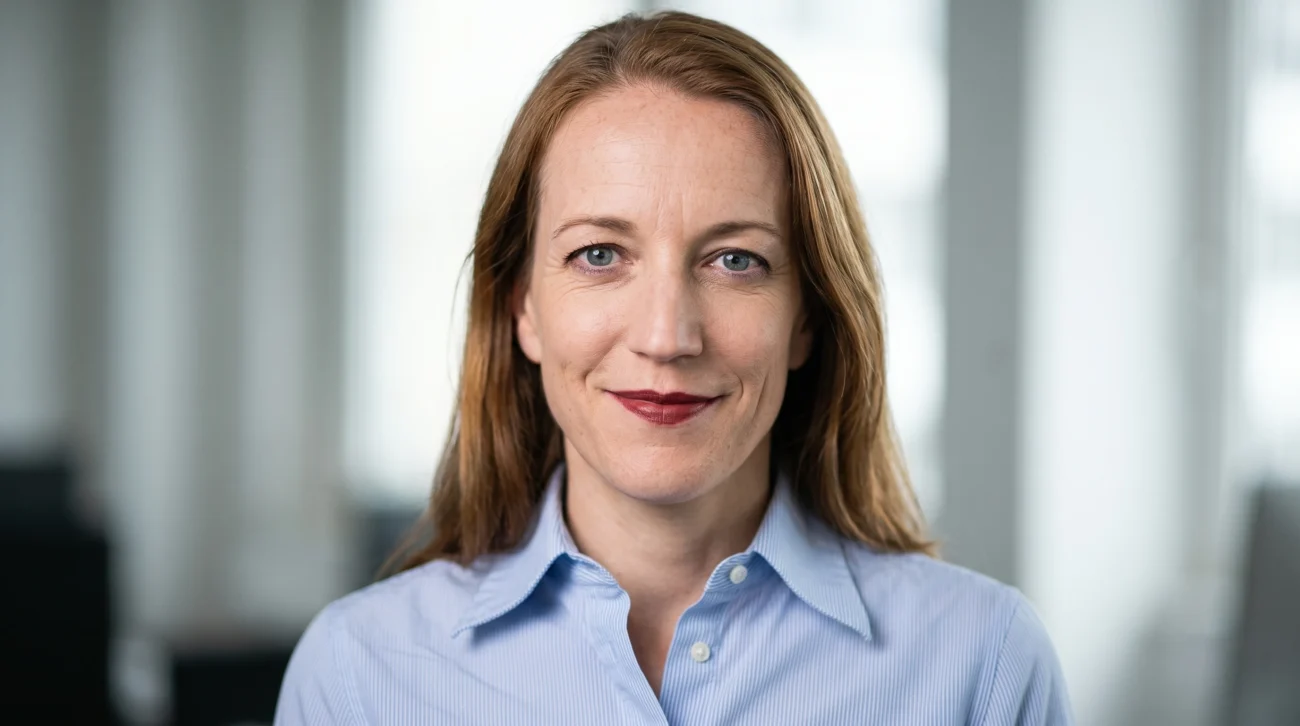
Yolande Knell has built her public reputation in places where journalism is tested sentence by sentence. As a BBC Middle East correspondent, she reports from one of the most closely watched and fiercely contested regions in the world, where a single phrase can be challenged, a casualty figure can change, and access to the scene is often limited. Readers usually encounter her name beneath stories from Jerusalem, Gaza, Israel, and the occupied West Bank, then search for the person behind the byline. What they find is less a celebrity biography than the record of a working journalist whose career is defined by war, politics, human suffering, and the careful discipline of public-service reporting.
Knell is not a media personality who has turned her private life into content. She is a correspondent whose profile comes mainly from her work, her BBC role, and the subjects she covers. That makes her biography harder to write in the usual way, but also more revealing. The most reliable story of Yolande Knell is the story of a reporter who has spent years explaining the Middle East to international audiences without making herself the center of the frame.
Early Life and Family Background
Public information about Yolande Knell’s early life is limited, and that is an important fact in itself. Unlike actors, elected officials, or public campaigners, foreign correspondents often keep their family background, childhood, and personal history out of public circulation. There is no widely verified public record confirming her exact date of birth, parents, siblings, hometown, or childhood household. Responsible biography writing has to respect that boundary rather than fill the silence with guesses.
Several online biography pages claim to know details about Knell’s age, birthplace, education, family, and personal life, but those claims are often unsourced or inconsistent. Some give different dates of birth, while others attach career details that do not match her widely known role as a BBC Middle East correspondent. That kind of contradiction is a warning sign for readers. If a source cannot reliably describe her current job, it should not be treated as a strong authority on her private life.
What can be said with confidence is that Knell has chosen a career that requires a high degree of stamina, cultural knowledge, and editorial caution. Middle East reporting is not a casual assignment; it demands comfort with uncertainty, repeated exposure to trauma, and the ability to explain history without turning every article into a textbook. Those habits are usually formed over many years of reporting, not in a single dramatic career break. Her public record suggests a journalist shaped by the discipline of the beat more than by the performance of public fame.
Education and Early Ambitions
Yolande Knell’s formal education has not been clearly documented in reliable public sources. Some websites list universities or degrees, but those details are not consistently verified by primary records or major institutional profiles. Because of that, her education should be described cautiously rather than presented as settled fact. What is visible, instead, is the professional education that comes through repeated field reporting in complex and high-pressure environments.
Journalists who reach Knell’s level at a major broadcaster usually develop through years of newsroom work, editing, field production, local reporting, foreign assignments, and live coverage. The BBC’s correspondent structure rewards accuracy, clarity, speed, and the ability to work across platforms. Knell’s career shows those qualities through repeated assignments on stories that require both immediate reporting and deeper context. Her path appears to be one built through steady professional credibility rather than a single public breakthrough.
Her early ambitions are not something she has widely discussed in public interviews, at least not in a way that has become part of the reliable public record. That does not make the subject empty, but it does limit what can be said honestly. The safest conclusion is that her career reflects a long commitment to international reporting, especially the kind that sits close to conflict, diplomacy, humanitarian crises, and ordinary life under political strain. In a field where trust is earned slowly, that commitment matters more than a neatly packaged origin story.
Career at the BBC
Yolande Knell is best known for her work with BBC News, where she has been identified publicly as a Middle East correspondent. Her reports have appeared on some of the most sensitive and difficult stories involving Israel, Gaza, Jerusalem, the occupied West Bank, and Palestinian politics. The BBC platform has placed her work before a large international audience, including readers and viewers who rely on the broadcaster for explanations of fast-moving events. That visibility has made her name familiar to people who follow the region closely.
Her reporting often moves between breaking news and human-focused field pieces. She has covered the impact of violence on civilians, the political decisions behind security measures, the conditions facing Palestinians in Gaza and the West Bank, and the experiences of Israeli families affected by attacks and hostage-taking. That range is central to the work of a regional correspondent. The job is not simply to report what officials say, but to show how policy, conflict, law, and fear reach people’s daily lives.
The BBC’s style also shapes how Knell’s work appears to readers. Its correspondents are expected to attribute claims carefully, include competing accounts where relevant, and make clear what has and has not been verified. That can make some reports feel restrained, especially in moments of intense public anger. But restraint is part of the job when the facts are disputed, access is restricted, and the stakes are high.
Reporting From Jerusalem, Gaza, Israel, and the West Bank
Knell’s most visible work is tied to the geography of the Israeli-Palestinian conflict. Jerusalem is often the center of that reporting, not only as a city of religious and political meaning, but as a base from which correspondents follow stories across Israel, Gaza, and the occupied West Bank. The region demands close attention to legal status, borders, military authority, settlement expansion, movement restrictions, and the language used by different sides. A correspondent must explain those subjects without losing the reader in jargon.
Her reporting has included stories about Gaza’s humanitarian conditions, Israeli security policy, Palestinian political institutions, settler violence, and families caught in the aftermath of attacks and war. These are not separate subjects so much as overlapping parts of the same long crisis. A story about food supplies in Gaza can involve aid agencies, Israeli authorities, border crossings, local markets, armed groups, and international pressure. A story about West Bank violence can involve settlers, soldiers, Palestinian residents, courts, land claims, and the wider politics of occupation.
What makes this beat especially difficult is that access is often uneven. During periods of war, foreign reporters may be unable to enter certain areas independently, especially Gaza. That means correspondents must work through local journalists, aid workers, official statements, video, eyewitness testimony, and limited visits when possible. A careful reporter has to tell audiences not only what is known, but how it is known.
The Israel-Gaza War and a More Visible Public Role
The Hamas-led attacks on Israel on October 7, 2023, and the war in Gaza that followed pushed Middle East correspondents into even greater public visibility. Knell became one of the BBC journalists whose name appeared repeatedly on stories about the consequences of that period: Israeli hostages, Palestinian civilian suffering, aid access, military operations, displacement, and diplomatic pressure. These stories were emotionally charged from the start and became more contested as the death toll rose and humanitarian conditions worsened. The result was a reporting environment in which every article carried the weight of grief, anger, politics, and scrutiny.
For readers, Knell’s work during this period often served as a bridge between official statements and lived experience. The BBC audience wanted to know what Israeli families were enduring, what Palestinians in Gaza were facing, what aid agencies were warning, and what governments were saying behind carefully chosen diplomatic language. That kind of reporting can look simple on the page, but it depends on a difficult editorial balance. It must give human suffering its full force without allowing emotion to outrun verification.
This period also sharpened public criticism of the BBC and its correspondents. Some readers accused the broadcaster of being too soft on Israel; others accused it of being too harsh. Some objected to terminology, while others questioned which voices were featured and which facts were emphasized. Knell’s name, like those of other BBC correspondents in the region, became part of a wider debate over how the war should be reported.
Public Image and Journalistic Style
Yolande Knell’s public image is professional, restrained, and tied almost entirely to her reporting. She is not known for cultivating celebrity status, personal branding, or a highly visible public persona outside her BBC work. That gives her a different kind of profile from journalists who build audiences through opinion columns, podcasts, or social media commentary. Knell’s authority comes from being present on the beat and producing reports under the BBC name.
Her style is often grounded in human detail. She tends to report through the experiences of people directly affected by events, then connect those experiences to policy, history, or official action. That approach is common in strong foreign reporting because it gives readers a way into stories that can otherwise feel remote or overwhelmingly complex. It also carries risk, because in Israel-Palestine coverage the choice of whose suffering leads a story can itself become controversial.
Her work also reflects the demands of broadcast journalism, even when it appears in written form. BBC correspondents often write in clear, direct language designed for broad audiences, not specialists. They must explain enough history to orient readers without burying the news. Knell’s reporting is part of that tradition: accessible, careful, and shaped by the need to make difficult events understandable to people far from the scene.
Controversies, Criticism, and the Pressure of the Beat
Any journalist covering Israel, Gaza, and the occupied West Bank will face criticism, and Knell is no exception. Media-monitoring groups, activists, governments, and ordinary readers regularly challenge BBC coverage from opposing directions. Some pro-Israel critics have accused BBC reports of framing Israel unfairly or using language that softens Palestinian violence. Some pro-Palestinian critics have accused the BBC of giving too much weight to Israeli official narratives and too little to Palestinian suffering.
These criticisms should not be dismissed, but they should be read carefully. Advocacy groups can identify real problems in coverage, especially when they track patterns in language, sourcing, and framing. They can also approach stories from a strongly defined point of view. The fair way to judge Knell’s reporting is not to accept or reject criticism wholesale, but to look at the specific piece, the sourcing, the headline, the attribution, and the context provided.
The pressure is heightened because the region is so heavily documented and so heavily disputed. A phrase such as “militant,” “fighter,” “terrorist,” “settler,” “occupied,” or “security operation” can carry legal and political meaning. Casualty figures may come from authorities that are themselves parties to the conflict, while independent verification may be impossible in the moment. That is why the best reporting on this beat is often less dramatic than social media commentary and more careful than many readers want it to be.
Marriage, Children, and Private Life
Yolande Knell has not made her private life a major part of her public identity. There is no strong public confirmation of her marital status, husband, children, or close family arrangements. Some websites make claims about these subjects, but they do not provide the kind of evidence that would justify presenting those claims as fact. In a biography of a working journalist, that distinction matters.
The privacy surrounding Knell’s personal life is neither unusual nor suspicious. Many foreign correspondents, especially those covering conflict and polarizing political issues, keep family details out of public view for safety and personal reasons. They may work in places where hostility toward journalists is real, and where online attention can spill into threats. Protecting family privacy is often a practical choice, not an image strategy.
Readers looking for personal details should understand the limits of public interest. Knell’s reporting can and should be assessed through her work, her accuracy, her fairness, and her professional record. Her family life does not need to be public for that assessment to happen. A respectful biography should not treat privacy as a mystery to be solved.
Net Worth, Salary, and Income Sources
There is no credible public record confirming Yolande Knell’s net worth. Some biography websites publish estimated figures, but those numbers appear speculative and are not backed by financial filings, contracts, salary disclosures, or reliable reporting. For a BBC correspondent, income would most likely come from journalism work, including salary or contractual arrangements with the broadcaster. Anything more precise would require evidence that is not publicly available.
BBC pay transparency can be complicated because only some high-earning presenters and senior figures are named in public disclosures. Many correspondents do not have individually disclosed salaries, and pay can vary by contract, role, location, seniority, and assignment. It would be misleading to attach a firm figure to Knell without a reliable source. A careful estimate would still be an estimate, not a fact.
The broader point is that Knell’s public significance does not rest on wealth. She is not a business celebrity, entertainer, or executive whose fortune is part of the story. Her public value comes from reporting, and her professional standing is better measured through assignments, visibility, and trust than through speculative money claims. In this case, saying “unknown” is more accurate than pretending to know.
Awards, Recognition, and Professional Standing
There is no widely confirmed public list of major individual awards attached to Yolande Knell. That does not mean her work lacks standing; it means award claims should be made only when they can be verified. In journalism, many respected correspondents build influence through long service and trusted reporting rather than public prizes. Knell appears to fit that pattern more than the model of a journalist known for a single trophy or famous scoop.
Her professional recognition comes through her role at the BBC and her repeated assignment to major Middle East stories. News organizations do not place correspondents on sensitive regional coverage casually. The work requires editorial trust, familiarity with the subject, and an ability to handle stories where mistakes can carry serious consequences. Being a regular BBC voice on this beat is itself a sign of professional standing.
That said, public visibility should not be confused with immunity from criticism. The same role that gives Knell authority also places her under a microscope. Her reporting is judged by readers who bring strong personal, political, religious, or national connections to the story. That makes her standing both valuable and constantly tested.
Lesser-Known Details About Her Career
One meaningful detail about Knell’s career is how much of it appears through collaborative newsroom systems rather than individual self-promotion. Her bylines may appear alone or with other BBC journalists, reflecting the way international news is often produced. A report from the Middle East may depend on field producers, camera crews, editors, local journalists, translators, security advisers, and desk editors far from the scene. The correspondent is visible, but the work is rarely solitary.
Another detail is that her reporting often lives between daily news and longer background explanation. She may cover a court case about media access, a family campaign involving hostages, or a political struggle inside Palestinian institutions. These subjects require more than event reporting. They require readers to understand why a decision, protest, legal challenge, or personal story matters beyond the immediate headline.
Not many people know this, but the most difficult part of such reporting is often not finding dramatic material. The region provides more drama than any journalist could responsibly use. The harder task is proportion: deciding what belongs in the story, what requires qualification, what cannot yet be verified, and what history must be included for the piece to make sense. That editorial judgment is one of the quiet skills behind Knell’s public work.
Where Yolande Knell Is Now
Yolande Knell remains publicly associated with BBC Middle East coverage. Her recent byline record places her on stories connected to Israel, Gaza, Jerusalem, the occupied West Bank, and regional political developments. She continues to be identified by professional media listings as a BBC Middle East correspondent. For readers, that means her current status is best understood through her ongoing reporting rather than through personal publicity.
The stories she covers remain urgent and unsettled. Gaza’s humanitarian crisis, the future of Israeli hostages and ceasefire arrangements, West Bank violence, Israeli domestic politics, and Palestinian political leadership are not resolved chapters. They are active reporting subjects that change quickly and require constant updating. Knell’s work sits within that continuing news cycle.
Her position also reflects the continued importance of correspondents who know a region over time. In a news culture crowded with instant reaction, experienced field reporters still matter because they can connect the immediate event to the larger pattern. Knell’s career shows the value of staying with a difficult story beyond the day it dominates the headlines. That is why her name continues to draw searches from readers who want to know who is explaining the region to them.
Frequently Asked Questions
Who is Yolande Knell?
Yolande Knell is a BBC journalist best known as a Middle East correspondent. She reports on Israel, Gaza, Jerusalem, the occupied West Bank, Palestinian politics, humanitarian conditions, and regional conflict. Her public profile is closely tied to her BBC reporting rather than to personal publicity or celebrity media. She is best understood as a working foreign correspondent covering one of the world’s most contested beats.
What nationality is Yolande Knell?
Knell is generally associated with British journalism through her work for the BBC. Reliable public profiles identify her professionally through the BBC rather than through a detailed personal biography. There is no need to stretch beyond that public record unless a strong source confirms more specific personal background. Her nationality is less central to her public role than her work as a BBC Middle East correspondent.
Is Yolande Knell married?
Yolande Knell has not publicly centered her marital status or family life in her professional profile. There is no strong, reliable public confirmation of a husband, spouse, or children. Claims about her private relationships on biography websites should be treated carefully unless they are supported by clear evidence. Her reporting record, not her personal life, is the proper basis for evaluating her public role.
How old is Yolande Knell?
Her exact age is not reliably confirmed in strong public sources. Some websites give birth years or dates, but those claims conflict and are not well supported. Because of that, a responsible biography should avoid stating a firm age. The public record supports her professional role far more clearly than it supports personal chronology.
What is Yolande Knell’s net worth?
Yolande Knell’s net worth is not publicly confirmed. Online estimates should be treated as speculation unless they come from reliable financial reporting or documented disclosures. Her likely income source is her work in journalism, especially through the BBC, but exact salary and assets are not public. Any precise number would be guesswork.
What does Yolande Knell report on?
She reports mainly on the Middle East, especially Israel, Gaza, Jerusalem, and the occupied West Bank. Her work has addressed war, hostage families, Palestinian life, settler violence, aid access, political disputes, and humanitarian conditions. The beat requires careful handling of competing claims, disputed facts, and limited access. That is why her reporting is often closely read by both general audiences and media critics.
Why is Yolande Knell criticized?
Knell is sometimes criticized because she covers the Israeli-Palestinian conflict, one of the most politically charged subjects in world journalism. Critics from different sides have challenged BBC coverage over language, framing, balance, and emphasis. That does not automatically prove bias in any specific report. The fairest approach is to judge each story by its sourcing, attribution, context, and accuracy.
Conclusion
Yolande Knell’s biography is not the story of someone who built a public identity through glamour, confession, or personal branding. It is the story of a journalist whose name became familiar because she reports from a region where history, grief, law, politics, and fear meet every day. Her work asks readers to pay attention not only to events, but to the people and systems behind them.
The limits of the public record also say something important. Knell has kept her private life private, and that choice should be respected. A credible account of her life should not invent family details, net worth figures, or childhood stories to create the appearance of intimacy. In her case, the most meaningful evidence is the reporting itself.
Her career matters because the Middle East still needs careful witnesses. The region is full of loud claims, painful truths, and facts that take time to confirm. Knell’s place in that story is as a correspondent working within the difficult craft of public-service journalism. For readers searching her name, the clearest answer is this: Yolande Knell is a BBC Middle East reporter whose significance lies in the seriousness of the beat she covers and the discipline required to cover it well.
