
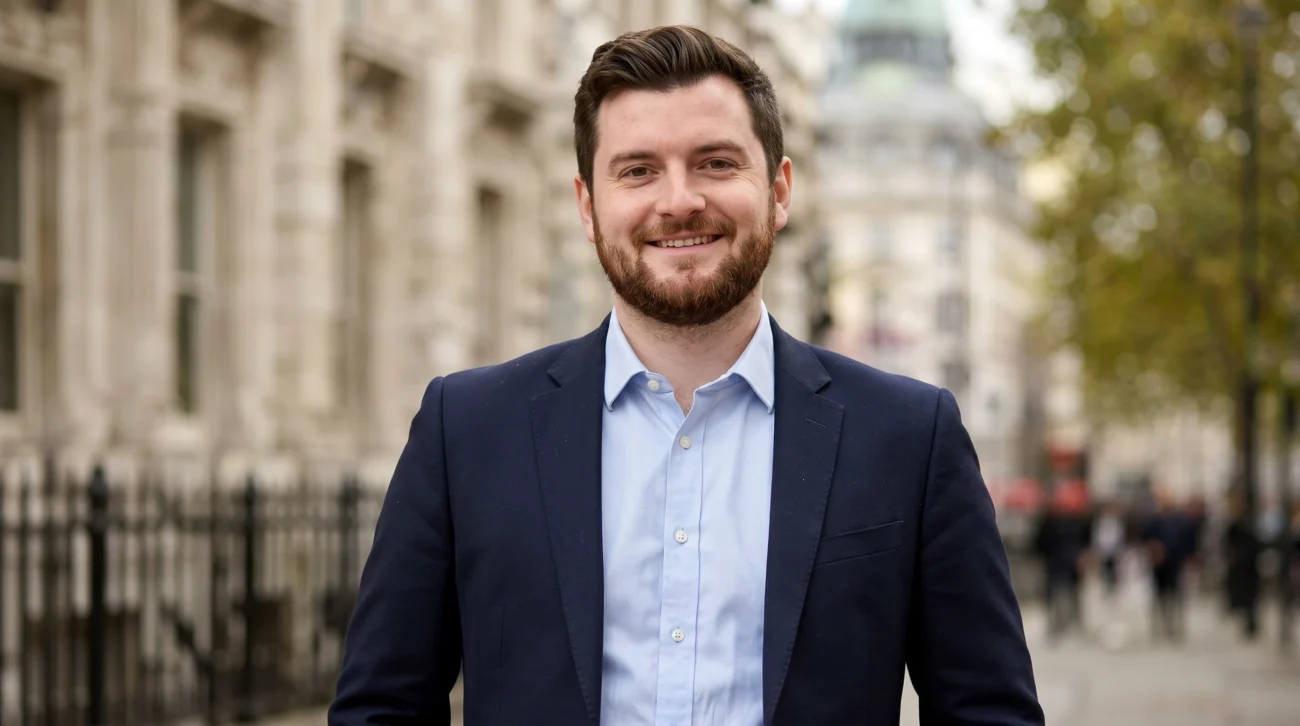
Henry Zeffman has built a reputation in British journalism by doing something increasingly rare in modern media: staying focused on the work rather than himself. As the BBC’s Chief Political Correspondent, he reports on leadership battles, elections, constitutional disputes, and the shifting mood inside Westminster with a calm authority that has made him one of the most recognizable political journalists in the United Kingdom. Yet alongside growing public visibility, one question continues to surface online: who is Henry Zeffman’s partner?
The answer is less dramatic than internet speculation suggests. Despite public curiosity, Zeffman has kept his private life almost entirely out of view. There is no confirmed public information about a spouse, husband, wife, or long-term partner. What does exist is a well-documented professional career, a distinguished family background, and a fast rise through the British political media establishment. The contrast between his public influence and personal privacy has only increased interest in him.
For readers searching for “Henry Zeffman partner,” the story is not simply about a romantic relationship. It is also about how a modern political journalist navigates visibility, reputation, and personal boundaries in an age where many public figures share nearly everything online. Zeffman has chosen a different path, and that choice says a great deal about both the man and the profession he represents.
Early Life and Family Background
Henry Zeffman was born in the United Kingdom in the mid-1990s and grew up in London in a family deeply connected to intellectual and artistic life. Although he has not spoken extensively about his childhood in interviews, publicly available information paints a picture of an academically driven upbringing shaped by culture, education, and public affairs.
His family background is especially interesting because achievement runs strongly through it. His brother, Oliver Zeffman, became a respected orchestral conductor and founder of the Melos Sinfonia. The Zeffman family also has connections to classical music through their relation to the renowned pianist Solomon Cutner, better known simply as Solomon. That artistic lineage gave the family a profile beyond politics or journalism and suggests a household where ambition and intellectual seriousness were encouraged early.
Friends and observers from his school years have described him as exceptionally bright and politically aware from a young age. He attended Highgate School in North London, one of Britain’s best-known independent schools, where many future lawyers, politicians, academics, and journalists have studied. The environment appears to have suited him. Even before university, Zeffman reportedly showed a sharp interest in current affairs and political debate.
Not many people know this, but his rise did not begin with television appearances or social media visibility. It started in student journalism and policy discussions, the traditional route for many serious British political reporters. That background gave him both technical reporting skills and a deep understanding of political systems before he entered national media.
Oxford and the Start of His Political Ambitions
After completing school, Zeffman studied Philosophy, Politics and Economics at Brasenose College, Oxford. PPE has long been associated with Britain’s political and media elite, producing prime ministers, civil servants, economists, and journalists. For Zeffman, the degree appears to have strengthened both his analytical skills and his understanding of political institutions.
While at Oxford, he became involved in student leadership and campus politics. He served as president of the junior common room at Brasenose, a role that involved representation, negotiation, and organizational leadership. Although student politics can sometimes appear minor in hindsight, many British journalists and politicians first sharpen their public instincts in those university environments.
Oxford also exposed him to a network that would later shape his professional life. Many future Westminster figures pass through the same institutions, and political journalism often draws heavily from those circles. But here’s the thing: connections alone do not explain Zeffman’s rise. British political journalism remains intensely competitive, and advancement depends heavily on accuracy, speed, and trust from editors.
During these years, Zeffman developed the reporting style that later became his signature. Unlike some television personalities who rely on confrontation or performance, he leaned toward calm explanation and careful sourcing. That approach helped him stand out in a crowded field increasingly dominated by opinion-driven commentary.
Breaking Into Journalism
Zeffman’s entry into professional journalism came through a combination of talent and early recognition. One of the turning points in his career arrived in 2015 when he won the Anthony Howard Award for Young Journalists. Named after the influential British journalist and political commentator Anthony Howard, the award has helped launch several major reporting careers.
Winning the prize brought Zeffman to the attention of senior editors in Westminster journalism. Soon after, he joined The Times, one of Britain’s most influential newspapers. Political reporting at a national newspaper is demanding work, especially for younger journalists. Reporters are expected to move quickly, verify information carefully, build political contacts, and navigate highly competitive media environments.
At The Times, Zeffman quickly earned a reputation as a capable political reporter with strong sourcing skills. He covered Brexit-era politics during one of the most turbulent periods in modern British government. Prime ministers changed rapidly, parliamentary rebellions became common, and political reporting moved at extraordinary speed. Young journalists covering Westminster during that era faced relentless pressure.
What’s surprising is how quickly Zeffman adapted to that atmosphere. Colleagues often described him as calm under pressure and unusually measured for someone reporting in such chaotic political conditions. Those qualities became increasingly valuable as British politics grew more unstable in the late 2010s.
Washington Correspondent and International Exposure
One of the defining stages of Zeffman’s career came when The Times appointed him as Washington correspondent. The role moved him from Westminster politics into the center of American political reporting at a time of enormous global attention.
Covering Washington required a different journalistic skill set. American politics operates with different rhythms, media expectations, and political traditions than Britain’s parliamentary system. Zeffman reported during a period shaped by polarization, international tensions, and intense media scrutiny surrounding U.S. institutions.
His work from Washington broadened his reputation beyond domestic UK reporting. Readers and editors saw that he could explain complicated political developments clearly while maintaining analytical distance. That balance is difficult in politically charged environments where journalists often face accusations of bias from multiple sides.
The move also increased his public profile. By this stage, he was no longer simply a promising young reporter. He had become one of the more visible political journalists of his generation, trusted to interpret major events for national audiences.
Still, despite the higher visibility, his private life remained almost completely absent from public discussion. Unlike many media figures who gradually turn into personalities or lifestyle brands, Zeffman kept attention fixed on his reporting.
Becoming BBC Chief Political Correspondent
In 2023, the BBC announced Henry Zeffman as its new Chief Political Correspondent. The appointment marked a major career milestone and confirmed his place among the leading political journalists in Britain.
The BBC role carries enormous responsibility. The organization remains one of the world’s most influential public broadcasters, and political correspondents operate under constant scrutiny. Every phrase, interview, and analysis segment is examined by politicians, rival journalists, and viewers across the political spectrum.
Zeffman’s move from newspaper journalism into one of the BBC’s flagship political roles reflected both professional trust and editorial confidence. He succeeded in transitioning from print reporting to a broader multimedia presence that included television appearances, live reporting, podcasts, and online analysis.
His reporting style translated well to broadcasting. He speaks clearly, avoids theatrical delivery, and focuses heavily on factual explanation. During elections and leadership contests, he often appears as one of the BBC journalists tasked with clarifying fast-moving developments for viewers.
That said, greater visibility naturally brought greater curiosity about his personal life. Search traffic around “Henry Zeffman partner” increased as viewers became more familiar with him onscreen. Yet no confirmed information about a relationship entered the public domain.
The Question of Henry Zeffman’s Partner
Public curiosity about journalists is not unusual, especially when those journalists become recognizable television figures. Audiences often want to know who public personalities spend their lives with, whether they are married, and how they balance demanding careers with relationships. In Zeffman’s case, however, confirmed information is extremely limited.
As of publicly available reporting, there is no verified record identifying Henry Zeffman’s partner. No reputable interviews, BBC biographies, or major newspaper profiles name a spouse or long-term relationship. He has not publicly discussed marriage, children, or romantic partnerships in any substantial way.
The truth is, many internet articles discussing his supposed partner rely on speculation rather than evidence. Some websites imply he is married without providing sourcing, while others suggest various possibilities with no confirmation at all. Responsible reporting requires separating public record from rumor, and the public record here is thin.
That absence of information appears intentional rather than accidental. Zeffman’s social media presence is highly professional and largely focused on political reporting. He rarely shares personal photographs or details unrelated to work. This approach differs sharply from many contemporary public figures who build audiences through personal disclosure.
Why Political Journalists Guard Their Privacy
To understand why information about Zeffman’s partner is unavailable, it helps to understand the culture of political journalism itself. Reporters covering national politics often face aggressive online criticism, public pressure, and intense political hostility. Keeping family and relationships private can be both practical and protective.
Political correspondents also work in a profession where credibility matters enormously. Some journalists deliberately avoid turning themselves into celebrities because they believe personal branding can distract from reporting. Zeffman appears to belong to that tradition of journalism, where the story matters more than the reporter.
There is also an ethical issue involved. A private partner who is not a public figure has no obligation to become part of media attention simply because of a relationship. British media culture has, at times, been criticized for excessive intrusion into personal lives, and many journalists are especially aware of those boundaries.
What’s interesting is that the mystery surrounding his relationship status has likely intensified public curiosity. In an era of constant oversharing, privacy itself can become unusual enough to attract attention.
Public Image and Reputation
Among colleagues and political observers, Zeffman is generally regarded as intelligent, measured, and unusually composed for someone working in high-pressure political media. He belongs to a generation of younger British journalists who came of age during Brexit, constitutional crises, and rapid political turnover.
His reputation rests largely on reliability rather than spectacle. He is not known for inflammatory commentary or dramatic television confrontations. Instead, his reporting emphasizes context, explanation, and institutional understanding. That approach has earned him respect across different parts of the political spectrum, even among people who disagree with particular analyses.
The BBC itself places enormous emphasis on impartiality, and Zeffman’s reporting style aligns closely with that culture. Viewers regularly see him explaining parliamentary procedures, election implications, and internal party disputes in straightforward language rather than partisan framing.
Public perception of him has also been shaped by his age. Compared with many senior political editors in British broadcasting, Zeffman reached a high-profile role relatively young. His rapid rise has drawn admiration but also scrutiny from those interested in how elite journalism careers develop.
Earnings and Estimated Net Worth
Like many journalists working for major British media organizations, Henry Zeffman’s exact salary is not publicly known. The BBC publishes salary information only for some of its highest-paid presenters and personalities, and correspondents below those thresholds often remain private.
Still, experienced political correspondents at major national outlets can earn substantial professional salaries. Before joining the BBC, Zeffman worked for The Times in senior reporting roles including Washington correspondent and associate political editor. Those positions are considered prestigious within British journalism and likely came with competitive compensation.
Estimates about his net worth vary widely online, but there is no reliable public financial disclosure confirming exact figures. Any numbers circulating on entertainment-style celebrity websites should therefore be treated cautiously. Based on career progression and senior media roles, it is reasonable to assume financial stability, but precise estimates remain speculative.
Unlike celebrities or entrepreneurs who build wealth through endorsements and business ventures, Zeffman’s career income appears tied primarily to journalism itself. His public image remains closely linked to reporting rather than commercial branding.
A Journalist From a New Generation
Henry Zeffman represents a newer generation of British political journalism shaped by instability, digital media, and audience distrust in institutions. Reporters entering the field in the 2010s encountered a media world far different from the one previous generations experienced.
Traditional newspaper influence declined while social media accelerated news cycles dramatically. Political reporters were expected not only to write stories but also to appear on television, post live updates online, host podcasts, and respond instantly to developing events. Zeffman adapted successfully to that environment without fully embracing the personality-driven culture surrounding it.
Here’s where it gets interesting. Despite being younger than many senior BBC political figures, he often projects an old-school reporting style. He prioritizes sourcing, institutional knowledge, and measured explanation over opinion-heavy performance. That balance has helped distinguish him from louder voices in political commentary.
His success also reflects changing pathways inside journalism. Earlier generations often spent decades climbing slowly through regional reporting before reaching national prominence. Zeffman’s rise happened faster, though still grounded in traditional reporting credentials and newsroom experience.
Personal Life Beyond Public View
There are only scattered public details about Zeffman’s life outside journalism. He does not frequently appear in celebrity coverage, lifestyle magazines, or entertainment reporting. Interviews tend to remain tightly focused on politics, elections, and media issues.
That restraint creates an unusual contrast with modern media culture, where audiences often expect emotional openness and constant access. Zeffman instead resembles an earlier generation of reporters who believed the audience should know the reporting, not the private individual behind it.
Some readers interpret that privacy as mystery, while others see it as professionalism. Either way, it has become part of his public identity. The continued online interest in “Henry Zeffman partner” shows how unusual strong personal boundaries have become among recognizable media figures.
At the same time, there is no evidence of controversy surrounding his personal life. Unlike some public figures whose relationships become tabloid material, Zeffman has managed to avoid becoming part of celebrity gossip culture entirely.
Where Henry Zeffman Is Now
As of 2026, Henry Zeffman continues serving as BBC Chief Political Correspondent and remains heavily involved in coverage of British national politics. His reporting includes elections, parliamentary developments, policy debates, and leadership changes across the UK political system.
The role keeps him at the center of national conversation during periods of political uncertainty. British politics continues to shift rapidly, and correspondents like Zeffman help audiences understand the institutional and electoral consequences of those changes.
His long-term future within journalism appears strong. Many observers see him as part of the next generation likely to shape political broadcasting in Britain over the coming decade. Whether that eventually leads to editorial leadership, major interview programs, or broader broadcasting roles remains to be seen.
For now, though, he continues to define himself primarily through reporting rather than personal publicity. That professional focus remains central to both his reputation and public image.
Frequently Asked Questions
Who is Henry Zeffman?
Henry Zeffman is a British political journalist who serves as the BBC’s Chief Political Correspondent. Before joining the BBC, he worked at The Times in several senior reporting positions, including Washington correspondent and associate political editor.
Does Henry Zeffman have a partner?
There is no publicly confirmed information identifying Henry Zeffman’s partner. He has kept his romantic life private, and no reputable source has verified a spouse or long-term relationship.
Is Henry Zeffman married?
As of current public reporting, there is no confirmed information showing that Henry Zeffman is married. Many online claims about his marital status are speculative and unsupported by reliable sourcing.
How old is Henry Zeffman?
Publicly available sources place Henry Zeffman among a younger generation of senior British political journalists, though exact birth-date details are not always widely emphasized in profiles. He was born in the mid-1990s.
What is Henry Zeffman known for?
He is best known for political reporting and analysis covering Westminster, British elections, and government affairs. His calm, analytical style has made him a prominent BBC political journalist.
What did Henry Zeffman do before the BBC?
Before joining the BBC in 2023, Zeffman worked at The Times. He covered UK politics extensively and later served as the newspaper’s Washington correspondent in the United States.
What is Henry Zeffman’s estimated net worth?
There is no verified public figure for Henry Zeffman’s net worth. Online estimates vary and should be treated carefully because no official financial disclosures confirm them.
Conclusion
Henry Zeffman’s career reflects the enduring value of disciplined political reporting at a time when media often rewards noise over clarity. His rise through British journalism came not from celebrity culture or public oversharing, but from steady reporting, institutional knowledge, and professional credibility.
The public curiosity surrounding “Henry Zeffman partner” reveals something larger than simple interest in a relationship. It reflects how audiences increasingly want to understand the personalities behind the news they consume every day. Yet Zeffman has drawn a firm line between public work and private life, and that boundary remains largely intact.
There is something striking about that choice in modern media culture. While many public figures turn personal disclosure into part of their professional identity, Zeffman continues to center his journalism rather than himself. Whether readers find that refreshing or mysterious, it has become a defining part of his image.
As British politics continues to shift and evolve, Zeffman is likely to remain one of the journalists interpreting those changes for national audiences. The public may continue searching for details about his personal life, but for now, his reporting — not his relationships — remains the story most clearly on the record.
