
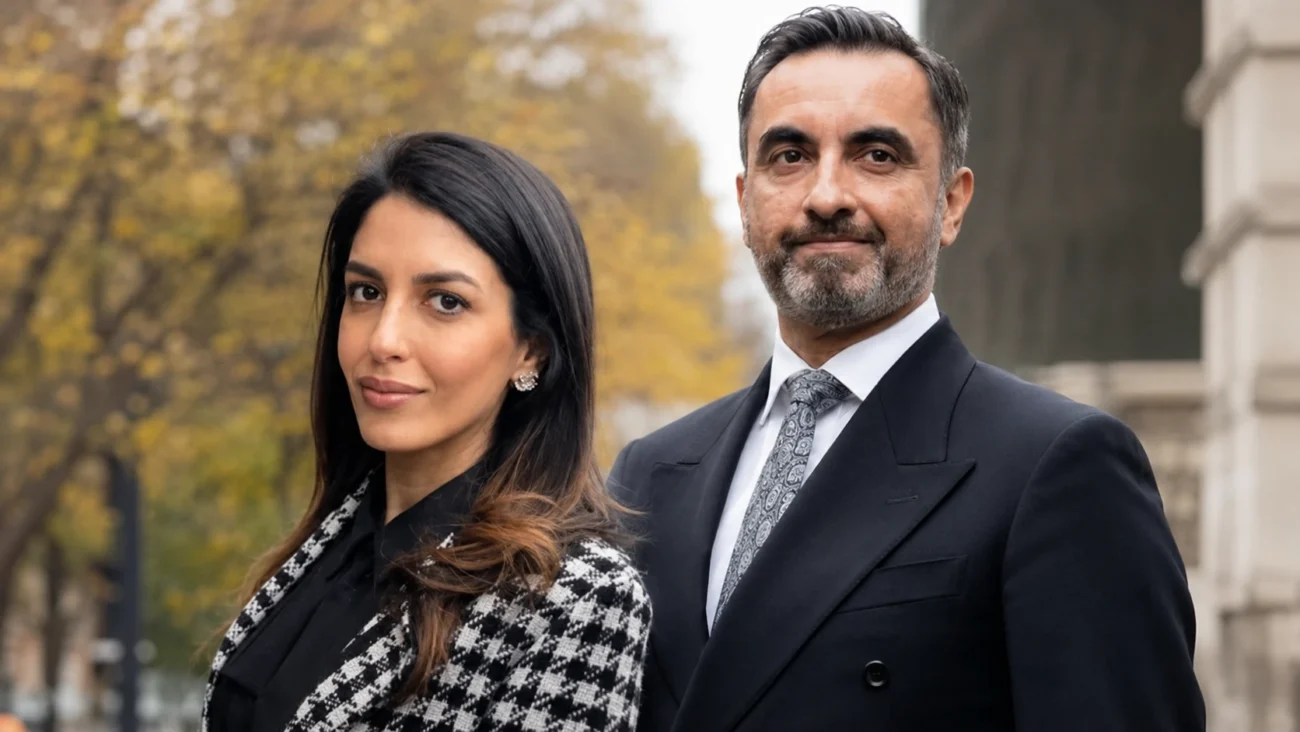
For years, Aamer Anwar has stood at the center of some of Scotland’s most emotionally charged legal battles. He has represented grieving families, challenged public institutions, confronted police conduct, and become one of the country’s most recognizable human rights lawyers. Yet while his courtroom work is heavily documented, another question keeps surfacing online with surprising persistence: who is Aamer Anwar’s wife?
The answer is both straightforward and complicated. Publicly available records identify his wife as Ifet Anwar, a woman who has largely stayed outside the media spotlight despite her husband’s high-profile legal career. Unlike celebrity spouses who become public figures in their own right, Ifet Anwar has maintained a low profile, appearing only occasionally in public archives or media photography. That privacy has created a vacuum often filled by speculation, recycled internet claims, and inconsistent biographical details.
What emerges from the reliable public record is not a tabloid story, but something more restrained and more human. Aamer Anwar’s family life appears to have existed largely outside the public theater that surrounds his legal activism. While his name regularly appears in newspaper headlines linked to major criminal appeals and public inquiries, the people closest to him have remained mostly protected from public exposure.
Understanding the interest in Aamer Anwar’s wife also means understanding the man himself. He is not simply another solicitor with a recognizable face. Over the past three decades, Anwar has become a prominent figure in Scottish civic life, known for taking politically sensitive cases and speaking forcefully on racism, justice, and state accountability. Readers searching for his wife are often searching for context about the person behind that public image.
Aamer Anwar’s Early Life and Family Background
Aamer Anwar was born in England to Pakistani parents and later moved to Scotland, where he built the career that would make him nationally known. Public biographical profiles consistently place his arrival in Glasgow during the 1980s, when he attended the University of Glasgow. He originally studied mechanical engineering before moving toward social sciences and eventually law, a path that reflected both intellectual curiosity and growing political awareness.
His early years in Scotland shaped much of his later identity. During the late 1980s and early 1990s, Glasgow was wrestling openly with racism, sectarianism, and tensions surrounding immigration and multiculturalism. Anwar became involved in anti-racism activism while still a student, and that activism often placed him in direct confrontation with authority figures and institutions.
One event from that period became especially important in shaping his public reputation. In 1991, Anwar was involved in an incident with police officers while he was a student activist. He later pursued legal action connected to the event, and the case became one of the defining moments that pushed him toward law and public advocacy. Friends and colleagues have often described this period as formative because it sharpened his interest in civil liberties and institutional accountability.
The truth is, Anwar’s public career has always carried a deeply personal undercurrent. He has frequently spoken about racism, identity, and belonging not as abstract political themes but as lived realities. That background helps explain why his legal work later focused so heavily on families who believed they had been failed by the justice system.
Education and the Move Into Law
Aamer Anwar’s route into the legal profession was not especially conventional. Unlike lawyers who move directly through elite academic and professional pipelines, his early years mixed activism, academic shifts, and political organizing. That combination later became part of his appeal to clients who often saw him as more approachable and more openly political than traditional criminal defense solicitors.
After his studies at the University of Glasgow, Anwar trained as a solicitor and gradually established himself in criminal defense and civil liberties work. By the late 1990s and early 2000s, his name was beginning to appear in media reports connected to difficult and controversial cases. Scotland’s legal community is relatively small, and lawyers who take outspoken positions often become well known quickly.
What separated Anwar from many contemporaries was his willingness to speak publicly and emotionally about injustice. He did not present himself merely as a technician of the law. Instead, he often appeared as both lawyer and advocate, especially in cases involving race, police conduct, or bereaved families.
That style won admiration from supporters and criticism from opponents. Some saw him as one of Scotland’s most important human rights lawyers, while critics occasionally accused him of seeking publicity. But even critics acknowledged that he had become a significant figure in modern Scottish legal culture.
Career Breakthrough and Public Recognition
A major turning point in Anwar’s public profile came through his work connected to the murder of Surjit Singh Chhokar. Chhokar, a waiter of Indian descent, was murdered in North Lanarkshire in 1998, and the handling of the case triggered widespread concern about racism within the Scottish justice system.
Anwar became closely involved with the Chhokar family and campaigned for years alongside them. The case gained national importance because of failures in the original prosecution and because campaigners argued that systemic racism had affected how justice was pursued. The eventual conviction of Ronnie Coulter in 2016, after legal reforms and renewed proceedings, transformed the case into a landmark chapter in Scottish legal history.
Not many people know this, but Anwar’s visibility during this period changed his career permanently. He was no longer simply a solicitor working within the legal system. He had become one of Scotland’s most recognizable legal campaigners, someone associated with politically sensitive cases and emotionally charged public debates.
His firm, Aamer Anwar & Co., later handled a wide range of high-profile matters. These included criminal appeals, extradition cases, public inquiries, and civil liberties disputes. Over time, Anwar developed a reputation for representing people who believed powerful institutions had failed them.
The public image that emerged was unusually forceful for a lawyer. Television interviews, newspaper commentary, and courtroom appearances all contributed to a reputation that combined legal expertise with political activism. That visibility naturally increased public curiosity about his personal life and family.
Marriage to Ifet Anwar
Publicly available information identifies Aamer Anwar’s wife as Ifet Anwar. Although she has never cultivated the same public profile as her husband, her name appears in editorial image archives and online references linked to Anwar’s family life. One of the clearest public records comes from the National Galleries of Scotland, which includes a 2010 family portrait featuring Aamer Anwar, his wife, and their son.
The portrait was part of a wider project documenting Scottish families and identity. In the image, the couple wore traditional Pakistani wedding clothing, a detail that quietly reflected the intersection of heritage, migration, and modern Scottish life. The photograph offered a rare public glimpse into Anwar’s private world, one far removed from courtrooms and television interviews.
Here’s where it gets interesting. Despite the attention surrounding her husband, Ifet Anwar appears to have intentionally avoided becoming a public personality herself. There are very few interviews, public appearances, or media profiles centered on her. That absence has led many internet articles to rely heavily on repetition rather than confirmed reporting.
Some sources describe Ifet Anwar as a solicitor involved in property law and legal practice in Glasgow. Those descriptions appear frequently online, though the amount of direct sourcing behind them varies. Reliable reporting standards require caution here because many internet biographies recycle the same claims without clearly showing where the information originated.
What does seem consistent is that the couple shared a long marriage and family life largely outside the spotlight. Public references indicate they had children together, though detailed information about the children has remained private. That privacy appears deliberate and has largely been respected by mainstream media organizations.
Family Life Away From Public Attention
For someone as publicly recognizable as Aamer Anwar, the separation between professional visibility and family privacy has been unusually strong. Many public figures eventually open parts of their domestic life to interviews, documentaries, or social media audiences. Anwar largely did the opposite.
His legal work often involved trauma, grief, and conflict. Families came to him during periods of immense public pressure, especially in cases tied to deaths in custody, wrongful convictions, or alleged institutional failures. Colleagues have suggested that he understood the emotional cost of publicity better than many lawyers, which may partly explain why his own family life stayed protected.
The little that has emerged publicly suggests a household shaped by both Scottish and Pakistani cultural influences. The family portrait displayed by the National Galleries of Scotland reflected that dual identity visually, presenting the family in traditional dress while placing them firmly within contemporary Glasgow life.
That balance mirrors broader experiences within many British Pakistani families, particularly among professionals who built careers in law, medicine, politics, and public service during the late twentieth century. Anwar himself often spoke publicly about racism and integration, but he rarely transformed his own family into part of that public conversation.
The result is that readers searching for “aamer anwar wife” frequently encounter fragments rather than a complete biography. There are photographs, references, and mentions, but very little direct public storytelling from the family itself.
Rumors, Separation Claims, and Public Confusion
Over recent years, conflicting reports about Aamer Anwar’s marital status have appeared online. Some newer biographical summaries claim the couple separated after many years of marriage and later divorced. Other articles continue describing Ifet Anwar as his current wife without qualification.
The problem is that many of these pages rely on weak sourcing. Several appear designed primarily for search traffic rather than serious reporting, and they often repeat one another’s language almost word for word. In subjects involving private family relationships, repetition does not automatically create reliability.
That said, some recent publicly accessible summaries state that the marriage ended after a long separation. The exact details remain difficult to independently confirm through open primary records. No widely circulated direct public statement from either Aamer or Ifet Anwar appears to explain the situation in detail.
This uncertainty matters because biographies can quickly drift into speculation. Readers often assume that if enough websites repeat a claim, it must be confirmed. But family matters, especially divorces and separations, are frequently reported inconsistently unless court records or direct interviews become public.
A careful reading of the available evidence suggests that Aamer and Ifet Anwar were married for many years and shared a family life largely outside media attention. Claims that the marriage later ended appear in some recent biographical sources, though the public documentation remains thinner than many articles suggest.
Legal Career, Politics, and Public Influence
By the 2010s, Aamer Anwar had become one of the most recognized solicitors in Scotland. His work extended far beyond criminal defense into broader political and human rights questions. He represented families connected to deaths in custody, campaigners seeking public accountability, and defendants involved in politically sensitive cases.
One of the highest-profile episodes of his later career involved Clara Ponsatí, the Catalan academic and politician sought by Spanish authorities following the Catalan independence referendum. Anwar represented Ponsatí during extradition proceedings, and the case drew international attention.
He also became heavily involved in the public inquiry surrounding the death of Sheku Bayoh, who died after being restrained by police officers in Kirkcaldy in 2015. The inquiry became one of Scotland’s most closely watched examinations of policing and race relations. Anwar’s role again reinforced his public identity as a lawyer willing to confront state institutions directly.
His political visibility expanded further when he was elected Rector of the University of Glasgow in 2017. The role placed him in a long tradition of public intellectuals, activists, and political figures associated with the university. Students strongly supported his candidacy, seeing him as someone who had maintained ties to Glasgow activism long after graduation.
What’s surprising is how unusual Anwar’s public standing became for a Scottish solicitor. Most lawyers remain known mainly within legal circles. Anwar crossed into broader civic and political culture, becoming someone ordinary readers recognized by name.
Public Image and Media Attention
Aamer Anwar’s media image has always been unusually intense for a lawyer. He often speaks emotionally during press conferences and has represented families during periods of enormous grief and public scrutiny. Supporters view this as evidence of genuine commitment, while critics sometimes argue he blurs the line between legal representation and political advocacy.
Either way, his visibility has fueled public curiosity about every aspect of his life, including his marriage and family. Search traffic around “aamer anwar wife” reflects that broader fascination. Readers are often trying to understand whether the passionate public advocate is equally guarded or expressive in private life.
Unlike many modern public figures, Anwar has never built a social media brand around family visibility. There are few carefully curated domestic images, few interviews about parenting, and little effort to create celebrity-style access. That restraint has likely helped preserve a degree of normalcy for those closest to him.
The contrast between his public intensity and private reserve may explain why readers remain interested. In public, he can appear confrontational, outspoken, and deeply emotional. In private, the available record suggests someone highly protective of family boundaries.
Business Interests and Estimated Net Worth
Reliable information about Aamer Anwar’s personal finances remains limited. Like many high-profile lawyers, his income likely comes primarily through legal practice, public inquiry work, and representation in major cases. His firm has handled several nationally significant matters over the years, which has naturally led to public curiosity about his wealth.
Online estimates of his net worth vary widely, and most should be treated cautiously. Many celebrity-style net worth websites provide figures without showing how they were calculated. There is no publicly verified financial disclosure that clearly establishes his personal wealth.
That said, Anwar has spent decades operating a prominent legal practice in Glasgow and has represented clients in major criminal and civil matters. By ordinary professional standards, that would place him among Scotland’s more successful solicitors financially. But the exact scale of his assets, investments, or personal wealth is not publicly confirmed.
Ifet Anwar’s financial profile is even less documented publicly. Some online sources connect her with legal practice and property-related work, though firm evidence about her independent earnings or business interests remains sparse.
Where Aamer Anwar Is Now
As of 2026, Aamer Anwar remains active in Scottish legal and public life. His firm continues handling criminal defense, public inquiry, and human rights cases, and he remains a regular media commentator on legal and political issues. Although newer generations of lawyers have emerged within Scotland’s public sphere, Anwar still occupies a distinctive position shaped by decades of activism and courtroom visibility.
His role in public inquiries has kept him especially prominent in recent years. These inquiries often involve emotionally charged testimony, political pressure, and intense media scrutiny. Anwar’s ability to navigate those environments has helped sustain his reputation even as Scottish politics and legal culture continue changing.
The personal side of his life remains more difficult to map. Public references to Ifet Anwar continue appearing online, though reliable updates about their current relationship status remain limited. That uncertainty has not reduced public curiosity, but it does highlight the difference between public interest and public entitlement.
The truth is, part of Anwar’s enduring fascination comes from the tension between openness and privacy. He has spent decades demanding accountability from institutions while keeping much of his own domestic world carefully guarded.
Frequently Asked Questions
Who is Aamer Anwar’s wife?
Aamer Anwar’s wife has been publicly identified as Ifet Anwar. Her name appears in editorial image archives and online references connected to the Scottish lawyer’s family life. Despite public interest in her husband, she has largely stayed outside the media spotlight and maintained a private profile.
Is Aamer Anwar still married?
Public information on this subject is inconsistent. Some recent biographical summaries suggest that Aamer and Ifet Anwar separated after many years of marriage and later divorced, while other sources continue describing them as married. No detailed public statement from the family appears to have clarified the situation fully.
Does Aamer Anwar have children?
Public references indicate that Aamer Anwar has children. A family portrait held by the National Galleries of Scotland specifically references his son. Beyond that, detailed information about his children has remained private, and mainstream reporting has generally respected those boundaries.
What is Ifet Anwar known for?
Ifet Anwar is primarily known publicly through her connection to Aamer Anwar. Some online biographies describe her as a solicitor involved in legal work in Glasgow, particularly in property-related practice areas. However, publicly verified details about her career remain limited compared with the extensive coverage of her husband’s work.
Why is Aamer Anwar famous?
Aamer Anwar became widely known through high-profile criminal defense and human rights cases in Scotland. He has represented families involved in major public controversies, including cases linked to racism, deaths in custody, and public inquiries. His outspoken style and political activism also contributed to his public profile.
What is Aamer Anwar’s estimated net worth?
There is no publicly verified figure for Aamer Anwar’s net worth. Online estimates vary considerably and should be treated cautiously because they are often based on speculation rather than documented financial disclosures. His long-running legal career and prominent practice suggest professional financial success, but exact numbers remain unconfirmed.
Conclusion
Aamer Anwar’s story is ultimately about far more than courtroom victories or public controversy. Over three decades, he has become one of Scotland’s most recognizable legal voices, associated with cases involving justice, race, political accountability, and public grief. His career has unfolded almost entirely in public view.
His family life, however, followed a very different path. Ifet Anwar remained largely outside the spotlight even as her husband became a national figure. That separation between public advocacy and private family life appears intentional, and it has shaped how little reliable information exists about her compared with the vast coverage of Anwar himself.
The continued interest in “aamer anwar wife” says something larger about modern public curiosity. Readers increasingly want to understand the personal lives behind public figures, especially those who appear frequently in emotionally charged national debates. But strong biography writing depends on respecting the line between documented fact and assumption.
For Aamer Anwar, that line remains important. The public knows the lawyer, the activist, and the campaigner. The private man, husband, and father has remained far more difficult to fully see, and perhaps that is exactly how he intended it.
