
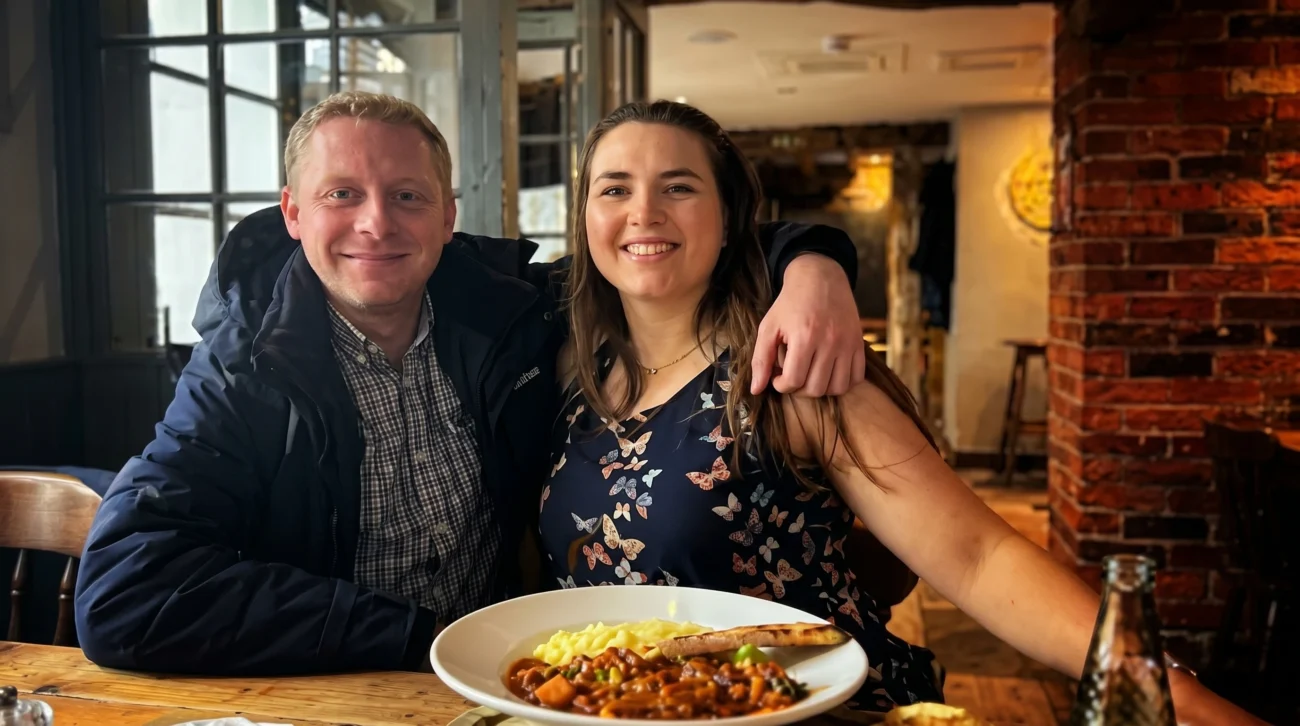
Chloe Dobbs is one of those modern media figures whose name travels faster than her biography. Viewers may first notice her in a political clip, a GB News debate, a social-media exchange, or Channel 4’s immigration series Go Back to Where You Came From. Then comes the natural second search: who is she, where is she from, and does Chloe Dobbs have a partner? The honest answer is that Dobbs has built a public profile around politics and commentary, while keeping her romantic life out of the verified public record.
That separation is the most important fact about the search phrase “chloe dobbs partner.” There is no reliable public confirmation that Chloe Dobbs is married, engaged, or in a publicly identified relationship. No credible profile, interview, or official statement has established the name of a partner. For a young commentator whose work often sits inside heated political debate, that privacy is not a gap to fill with guesses; it is part of the boundary between her public role and her personal life.
Who Is Chloe Dobbs?
Chloe Dobbs is best known as a British political commentator and media personality associated with right-leaning political discussion. Her public appearances have placed her in conversations about immigration, culture, British identity, and party politics. She has been described in media coverage as a GB News regular, and her online presence under the “Dobbs and Policy” name has helped connect her commentary to a wider digital audience. She is not a traditional celebrity, but she has become visible enough for readers to want a fuller picture.
Her rise reflects a shift in British political media. A commentator no longer needs a long newspaper column or a senior party job to become recognizable. Short clips, panel appearances, YouTube commentary, and social media posts can quickly turn a young political voice into a familiar name. Dobbs belongs to that newer class of media figures whose influence is built through repetition, clarity, and the ability to speak forcefully in formats designed for online circulation.
That visibility also explains the curiosity about her private life. Readers often search for a partner because they are trying to understand the person behind the opinions. They want to know whether she is married, whether she has children, who her family is, and what shaped her worldview. In Dobbs’ case, much more is known about her public commentary than about her home life, which makes careful wording essential.
Chloe Dobbs Partner: What Is Publicly Confirmed?
As of the available public record, Chloe Dobbs has not confirmed a partner. There is no verified public information naming a boyfriend, girlfriend, husband, wife, fiancé, or long-term romantic companion. Any article that gives a name without clear sourcing should be treated with caution. The most accurate answer is that her relationship status has not been publicly established.
That does not mean Dobbs is single, married, or secretly dating someone. It means those claims are not supported by reliable public evidence. There is a difference between saying “she has no partner” and saying “no partner has been confirmed.” The second statement is the responsible one because it describes what can be checked.
This matters because online searches often reward certainty, even when certainty is not deserved. A thin biography page may turn a lack of information into a firm claim about someone’s dating life. That kind of writing can spread quickly, especially around younger public figures with limited public records. A fair profile should resist that pressure and state the boundary plainly.
Why Her Relationship Status Draws Attention
People search for Chloe Dobbs’ partner because her public profile has grown in a fast, fragmented way. She appears in political media rather than entertainment media, but political media now produces celebrity-style curiosity. Viewers see a face repeatedly, hear strong opinions, and then look for background details that make the person feel more complete. Partner searches are part of that wider curiosity.
There is also a practical reason. Dobbs does not appear to have made her private life central to her public identity. She is not known for lifestyle coverage, relationship interviews, wedding coverage, or family-led public appearances. That absence creates a vacuum in search results, and vacuums tend to attract speculation. The less a person shares, the more some readers try to infer from small clues.
But here’s the thing. A person can be public about politics and private about relationships at the same time. Dobbs has chosen, at least publicly, to be identified through her commentary rather than through romantic status. That choice should be respected unless she decides to make a relationship part of her public story.
Early Life and Family Background
Publicly available information about Chloe Dobbs’ early life remains limited. Media coverage connected to Go Back to Where You Came From described her as originally from Cornwall and living in London. That detail gives a basic sense of place, but it does not amount to a full childhood biography. There is no widely verified public account of her parents, siblings, or family upbringing.
The Cornwall detail is still meaningful because it places her outside the usual assumption that every young political commentator emerges from the same London media circuit. Cornwall has its own political tensions, economic pressures, and cultural identity, which can shape how people see questions of nation, belonging, and opportunity. That said, no responsible profile should overstate the influence of a hometown without Dobbs herself explaining it. The fact can be reported; the deeper interpretation should remain careful.
Her family life appears to be private. There is no confirmed public record identifying her parents or close relatives in a way that is central to her career. That privacy is common for commentators who become known through debate rather than through entertainment or public office. It also means that claims about her family should be treated as unverified unless they come from Dobbs or a reputable source.
Education and First Public Ambitions
Some coverage and online profiles have linked Chloe Dobbs to Oxford, though the exact details of her education are not consistently documented in major public sources. The association matters because an Oxford background often becomes part of how young British commentators are framed. It suggests academic polish, access to debate culture, and proximity to networks that feed politics and media. But unless degree details, college affiliation, and dates are confirmed by a primary source, those specifics should not be invented.
What can be said with more confidence is that Dobbs entered public life through ideas and argument rather than performance in the entertainment sense. Her visible work has centered on political interpretation, media discussion, and cultural debate. She speaks in a style shaped for opinion broadcasting: direct, fast, and designed to make a position clear. That is a different skill from reporting, and it has its own risks.
For young commentators, first ambitions often become visible only after the platform arrives. Dobbs’ “Dobbs and Policy” branding suggests a deliberate attempt to attach her name to political analysis and public affairs. It presents her not just as a guest on panels, but as someone trying to build a recognizable commentary identity. That kind of self-branding is now a common path into British media.
Career Breakthrough and Media Visibility
Chloe Dobbs’ wider public recognition appears to have come through a mix of social media, political commentary, and appearances on GB News. GB News has become a home for commentators who speak to audiences skeptical of progressive politics, mainstream media habits, and parts of the British political establishment. Dobbs’ public persona fits naturally into that setting. She is young, direct, and comfortable discussing divisive subjects.
Her appearances placed her in the growing category of commentators who are known less for a single office or book than for a stream of clips and debates. This can make a career feel both highly visible and hard to document. A viewer may recognize her from several panels without knowing her full background. That is one reason biography searches around Dobbs often focus on basic identity questions.
The “breakthrough” for a commentator like Dobbs is not one dramatic award or single career-defining role. It is the point at which a name starts recurring across platforms enough that audiences remember it. Her GB News appearances, social-media activity, and Channel 4 casting together created that wider recognition. From there, readers began looking for the personal details that are usually attached to a public figure.
Channel 4 and Go Back to Where You Came From
Dobbs gained broader notice through Channel 4’s 2025 series Go Back to Where You Came From. The programme followed British participants with strong views on immigration as they encountered refugee routes and the human consequences of displacement. The title itself was deliberately provocative, drawn from a phrase associated with hostility toward migrants. That framing made the programme controversial before many viewers had even seen it.
Dobbs was listed among the participants, and her involvement placed her political views in a different kind of setting. Studio commentary allows a person to argue from distance, often in short segments with familiar opponents and familiar terms. A documentary-style format asks something else: how a public position holds up when placed near lived experience. That tension was central to the programme’s appeal and criticism.
The series also made Dobbs more searchable among viewers who might not follow GB News. Some viewers encountered her for the first time not as a panelist, but as a participant in a charged television experiment about migration. That exposure widened the audience for questions about her politics, background, and private life. Yet even this high-profile appearance did not establish anything reliable about a partner.
Public Image and Political Identity
Chloe Dobbs’ public image is tied closely to right-leaning political debate. She is generally discussed in connection with conservative media spaces, immigration arguments, and cultural topics that divide British audiences. Supporters may see her as a young voice willing to challenge fashionable opinion. Critics may see her as part of a media ecosystem that rewards provocation and hard lines.
Both readings reflect the nature of modern commentary. Political media now prizes clarity and conflict, especially in formats built for short clips. A commentator’s value often depends on whether they can state a position sharply enough to travel online. Dobbs operates inside that system, where a sentence from a panel can reach people who never watched the full discussion.
That system also affects how audiences judge her. Some people come to her through agreement, others through outrage, and many through curiosity. The partner question sits outside the substance of her politics, but it grows from the same visibility. Once a person becomes part of public debate, search interest often expands beyond the work itself.
Family, Marriage, and Children
There is no reliable public information confirming that Chloe Dobbs is married. There is also no verified public information showing that she has children. Her public profile has not centered on domestic life, family interviews, or partner-led appearances. In that sense, the record is quiet.
The silence should not be treated as proof of anything beyond privacy. Some public figures openly discuss family because it supports the image they want to share. Others avoid the subject because they prefer safety, independence, or professional focus. Dobbs appears to fall into the second category, at least based on what is publicly visible.
This is especially important because family claims are often repeated casually online. A wrong claim about marriage or children can follow a person for years. For Dobbs, the fair approach is simple: her family and relationship details are not publicly confirmed unless she chooses to share them. That may disappoint some searchers, but it protects accuracy.
Money, Income Sources, and Net Worth
There is no credible, verified net worth figure for Chloe Dobbs. Any exact number attached to her name should be viewed as an estimate at best, and likely an unsupported guess unless backed by transparent evidence. Young commentators usually have income streams that are difficult to measure from outside. Appearance fees, freelance work, platform income, sponsorships, and consulting can vary widely.
Dobbs’ likely income sources, based on her public work, would be media commentary, possible contributor fees, digital content, and related political or communications work. That does not mean any specific amount can be confirmed. Unlike elected officials, company directors, or major entertainers, commentators often do not have public financial disclosures that reveal earnings. Search sites that claim precise net worth figures often do so without access to real financial records.
A responsible biography should not pretend to know more than it does. Dobbs may earn money from television appearances and digital platforms, but the scale is not publicly established. There is no reliable basis for ranking her wealth or comparing it to better-documented public figures. The accurate position is that her net worth remains private and unverified.
Controversy and Criticism
Dobbs’ public work exists in a political space where controversy is almost built into the format. Immigration, national identity, multiculturalism, and social change are not soft subjects. They invite emotional responses, and the commentators who discuss them are often judged as much by tone as by argument. Dobbs’ appearances have therefore attracted attention from people who both agree and strongly disagree with her.
Her participation in Go Back to Where You Came From placed that scrutiny in a new setting. The programme’s concept was criticized by some viewers and reviewers as risky, uncomfortable, or ethically tense. At the same time, it drew attention because it forced participants and audiences to confront the human realities behind political language. Dobbs became part of that debate because she was one of the recognizable figures attached to the show.
Controversy can raise a profile, but it can also narrow how a person is seen. A commentator becomes reduced to one clip, one quote, or one programme. That is why a careful profile needs more than praise or condemnation. It should explain the public role, identify what is confirmed, and avoid turning disagreement into personal intrusion.
Why Privacy Matters More for Younger Public Figures
Younger media figures face a kind of exposure that older commentators did not experience in the same way. A television appearance can be clipped, reframed, mocked, praised, and circulated across platforms within hours. A name can become searchable before a person has the protections that usually come with a mature public career. Dobbs’ profile shows how quickly that can happen.
Relationship searches are part of that exposure. They may seem harmless, but they can lead to speculation about people who never agreed to make their partners or families public. For women in political media, this attention can also carry a sharper edge. Private life is often used to soften, discredit, or explain away public views in ways that male commentators may experience less often.
That does not mean readers should never ask biographical questions. It means the answers should be anchored to what is known. Dobbs’ work can be debated firmly because it is public. Her partner should not be invented because search demand exists.
What Chloe Dobbs Is Doing Now
Chloe Dobbs appears to remain active as a political commentator and digital media figure. Her public identity continues to sit around British politics, public policy, and culture debate. The “Dobbs and Policy” name suggests an ongoing effort to build a recognizable commentary platform beyond individual guest appearances. That matters because digital continuity is often what turns a commentator from a recurring guest into a known brand.
Her post-Channel 4 visibility depends partly on how she chooses to use the attention from Go Back to Where You Came From. Some participants in controversial factual television fade back into private life. Others use the moment to expand media work, grow audiences, and sharpen their public identity. Dobbs’ existing commentary background gives her a clearer route into the second path.
There is still a difference between public direction and private status. Her work may become more visible, and her political views may draw more scrutiny. That does not mean her romantic life will become public. Unless she speaks about a partner herself, that part of her biography remains unconfirmed.
How to Understand Chloe Dobbs Beyond the Search Term
The phrase “chloe dobbs partner” captures curiosity, but it does not capture the full person. Dobbs is better understood as part of a generation of commentators shaped by online video, polarised politics, and the collapse of old boundaries between television and social media. Her career has developed in a media culture where strong views are rewarded with attention. That attention then produces personal curiosity, whether or not the person invites it.
Her public story is still being written. She is young enough that major career milestones may still be ahead of her, and her current reputation may not be her final one. Many commentators change tone, platform, or focus as their careers mature. Some become broadcasters, some become campaigners, some move into writing, and others leave the spotlight entirely.
For now, the clearest picture is of a politically engaged media figure who has chosen not to make her partner part of the public record. That choice leaves readers with fewer personal details than they may expect from a biography. But it also sharpens the line between what matters publicly and what remains private. A good profile should respect that line without pretending the question does not exist.
Frequently Asked Questions
Who is Chloe Dobbs’ partner?
Chloe Dobbs has not publicly confirmed a partner. There is no reliable public source naming a boyfriend, girlfriend, spouse, fiancé, or long-term romantic companion. Any claim that identifies a partner should be treated cautiously unless it is supported by Dobbs herself or by credible reporting.
Is Chloe Dobbs married?
There is no verified public information showing that Chloe Dobbs is married. No reliable profile or statement has identified a husband or wife. The most accurate answer is that her marital status has not been publicly confirmed.
Does Chloe Dobbs have children?
There is no credible public information confirming that Chloe Dobbs has children. Her public profile has focused on political commentary and media appearances rather than family life. Claims about children should not be accepted without clear sourcing.
Where is Chloe Dobbs from?
Public coverage connected to her television appearance has described Chloe Dobbs as originally from Cornwall and living in London. Beyond that, detailed information about her upbringing and family background is limited. She has not made a full personal origin story central to her public identity.
What is Chloe Dobbs known for?
Chloe Dobbs is known for political commentary, appearances in British media, and her participation in Channel 4’s Go Back to Where You Came From. She is associated with discussions about immigration, culture, and conservative political debate. Her online presence under the “Dobbs and Policy” name has also helped define her public image.
What is Chloe Dobbs’ net worth?
Chloe Dobbs’ net worth is not publicly verified. Any exact figure online should be treated as an estimate unless it shows transparent evidence. Her likely income sources are connected to media commentary, digital content, and related public-facing work, but the amounts are private.
Why is there so little information about Chloe Dobbs’ private life?
Dobbs appears to keep her private life separate from her public commentary. That is common for commentators who are known for political views rather than entertainment or lifestyle coverage. The lack of detail should be understood as a privacy boundary rather than evidence of a hidden story.
Conclusion
Chloe Dobbs has become visible at the point where British politics, television debate, and digital media meet. She is known for commentary, for appearances in right-leaning media spaces, and for taking part in a Channel 4 programme that placed immigration arguments under public pressure. Those facts explain why readers search for more about her life. They do not, by themselves, answer every personal question.
The partner question is clear because the evidence is clear. No partner has been publicly confirmed, and no reliable source establishes that Dobbs is married, engaged, or in a publicly known relationship. The responsible answer is not to decorate that absence with speculation. It is to say plainly what is known and what is not.
That careful boundary does not make her biography empty. It places the emphasis where the public record is strongest: her media work, political identity, and growing visibility. Dobbs’ next steps will likely determine whether she remains a recurring commentator or becomes a more established public voice. For now, her private life remains private, and her public work is the part readers can fairly judge.
