
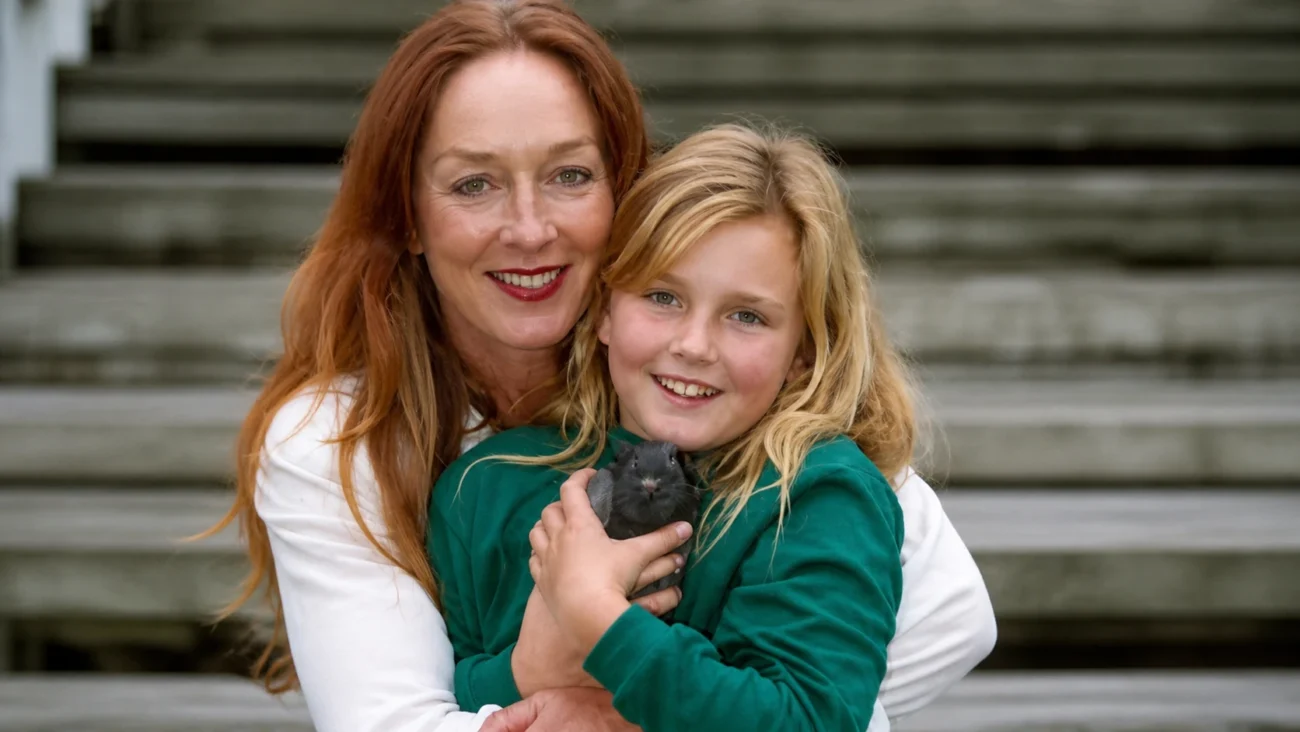
For years, the name Felicity Tonkin has surfaced in quiet corners of royal coverage—often framed as a footnote, a curiosity, or a “hidden” branch of a well-known family tree. Yet that framing misses the fuller, more grounded story. Felicity Tonkin, now known as Felicity Wade, has lived most of her life far from the attention that follows Britain’s royal circle, building a career and family in New Zealand with little public fanfare. What makes her story compelling isn’t ongoing scandal or celebrity, but the contrast between a highly public family connection and a deliberately private life.
Her name first entered public awareness through a legal and personal dispute involving her father, Captain Mark Phillips, the former husband of Princess Anne. But that moment, while defining in media coverage, represents only a small part of her life. To understand Felicity Tonkin fully, you have to step back from the headlines and look at what she has actually done, where she has lived, and how she has shaped a life that stands on its own.
Early Life and Family Background
Felicity Tonkin was born in August 1985 in New Zealand, the daughter of Heather Tonkin, an art teacher, and Mark Phillips, a British Olympic gold medalist in equestrian sport. At the time of her birth, Phillips was still married to Princess Anne, a detail that would later place Felicity at the center of public attention she did not choose. Her early years, however, were spent far from the British media environment, in a setting that allowed for a relatively ordinary upbringing.
Not many people know this, but Felicity’s childhood in New Zealand was shaped more by rural life and horses than by any royal association. Growing up in Whitford, near Auckland, she developed a strong connection to equestrian life, which would later influence her career. That environment—practical, outdoors, and rooted in animal care—stood in contrast to the highly structured and visible life associated with her father’s former marriage.
The truth is, Felicity’s early identity was defined less by who her father was and more by where she lived and how she was raised. Her mother remained her primary caregiver, and public records suggest that Felicity’s upbringing was grounded in New Zealand’s more relaxed and private social culture. For much of her childhood, her connection to the British royal family was not a lived experience but a distant fact.
The Paternity Case and Public Attention
Felicity Tonkin became widely known in 1991, when her mother pursued a paternity case that led to DNA testing confirming Mark Phillips as her father. The case drew media attention both in the United Kingdom and New Zealand, largely because of Phillips’s previous marriage to Princess Anne. What had been a private matter became part of a broader public narrative about royal relationships and personal conduct.
The case itself was straightforward in legal terms but complex in its implications. It established Felicity’s parentage clearly, but it also introduced her to a level of public scrutiny that would follow her name for decades. Media coverage at the time often focused on the impact on Phillips’s marriage and reputation, rather than on Felicity as a child.
Here’s where it gets interesting. While the paternity confirmation was widely reported, Felicity herself did not become a public figure in the way many might expect. There were no interviews, no public statements, and no attempt to engage with the media narrative. Instead, her life continued in New Zealand, largely outside the spotlight that had briefly turned toward her.
Connection to the Royal Family
Through her father, Felicity Tonkin is the paternal half-sister of Zara Tindall and Peter Phillips. Both Zara and Peter are the children of Princess Anne and Mark Phillips, making Felicity part of an extended family that includes one of Britain’s most recognizable royal figures.
But here’s the thing: that connection has never translated into a public role or visible presence within the royal family. Felicity has not appeared at official events, royal gatherings, or widely photographed family occasions. Her absence from Zara Tindall’s 2011 wedding to Mike Tindall became a small but telling detail in media coverage, often cited as evidence of distance within the family.
What’s surprising is how little verified information exists about personal relationships between Felicity and her half-siblings. Reports have suggested limited contact, but those accounts are based on older media coverage and have not been consistently updated with confirmed, firsthand statements. As a result, any conclusions about the nature of those relationships remain cautious at best.
Education and Career Path
While her family background drew attention early on, Felicity Tonkin’s adult life has been defined by her career in veterinary medicine. She studied veterinary science at Massey University, one of the country’s leading institutions for animal health and agricultural studies. She graduated in 2010, earning recognition for her work in equine studies.
Her choice of profession reflects a clear continuity with her upbringing. Horses were a central part of her environment growing up, and her career path suggests a deep, practical interest in their care and performance. Rather than pursuing a public-facing role, she focused on clinical expertise and hands-on work.
After completing her degree, she joined Veterinary Associates Equine, a practice based in the Auckland region. Over time, she advanced within the organization and is now listed as a veterinarian-director. Her areas of focus include lameness, performance issues in sport horses, and equine health more broadly, indicating a specialized and technically demanding field.
Life as Felicity Wade
At some point in her adult life, Felicity Tonkin became known as Felicity Wade following her marriage to Tristan Wade. The couple married in March 2015, according to publicly available records, and have built a life together in New Zealand. They have a son named James, a detail confirmed through both professional and secondary public sources.
Her husband, Tristan Wade, is associated with polo, another equestrian discipline that aligns with the couple’s shared interests. Their lives appear to revolve around horse sport and veterinary practice, a world that is both specialized and tightly connected but largely removed from mainstream celebrity culture.
What stands out is how consistently Felicity Wade has maintained her privacy. Unlike many individuals with high-profile family connections, she has not pursued media visibility, public commentary, or social media prominence tied to her background. Her identity, at least publicly, is rooted in her profession and family life rather than her lineage.
Public Image and Media Representation
Felicity Tonkin’s public image has largely been shaped by others. Media coverage tends to reintroduce her through her connection to Mark Phillips and the British royal family, often using language that emphasizes secrecy or distance. Terms like “hidden daughter” or “secret sister” appear frequently, even though the facts of her parentage have been public for decades.
That framing says more about media habits than about Felicity herself. The truth is, there is no ongoing mystery about her identity. What exists instead is a gap between what is publicly known and what remains private. That gap is often filled with speculation, which can distort the reality of her life.
At the same time, her professional profile offers a different perspective. It presents a clear, factual account of her education, career, and interests, without reference to royal connections. That contrast highlights how different narratives can emerge depending on the source and the intent behind the coverage.
Financial Standing and Net Worth
There is no publicly verified estimate of Felicity Tonkin’s net worth, and any figures that circulate online should be treated with caution. Unlike public figures in entertainment or business, she has not disclosed financial details, nor has she been the subject of detailed financial reporting.
Her income is most likely derived from her work as an equine veterinarian and her role within Veterinary Associates Equine. Veterinary practice, particularly in specialized areas like equine health, can provide a stable and respectable income, but it does not typically generate the kind of wealth associated with celebrity or high-profile business ventures.
That said, her financial situation appears consistent with a professional career built on expertise rather than public visibility. There is no evidence to suggest significant business ventures, endorsements, or external income streams beyond her veterinary work.
Where Felicity Tonkin Is Now
Today, Felicity Wade continues to live and work in New Zealand, maintaining her role within the equine veterinary field. Her professional profile suggests ongoing involvement in both clinical practice and continued education, indicating a commitment to her field.
She remains largely out of the public eye, with only occasional mentions in media tied to broader royal-family stories. There is no indication that she seeks or encourages public attention, and her lifestyle appears centered on work, family, and the equestrian community.
That continuity is perhaps the most defining feature of her adult life. Despite early public attention, she has maintained a consistent path that reflects her interests and priorities rather than external expectations.
Frequently Asked Questions
Who is Felicity Tonkin?
Felicity Tonkin is the daughter of Mark Phillips and Heather Tonkin, born in New Zealand in 1985. She is known publicly due to a 1991 paternity case and is the paternal half-sister of Zara Tindall and Peter Phillips. As an adult, she is known as Felicity Wade and works as an equine veterinarian.
Is Felicity Tonkin related to the British royal family?
Yes, she is connected through her father, Mark Phillips, who was previously married to Princess Anne. This makes her the half-sister of Zara Tindall and Peter Phillips. However, she is not a royal herself and holds no title or official role.
What does Felicity Tonkin do for a living?
Felicity Wade is an equine veterinarian based in New Zealand. She graduated from Massey University in 2010 and works in a veterinary practice focusing on horse health, including performance issues and lameness.
Is Felicity Tonkin married?
Yes, she is married to Tristan Wade. The couple married in 2015 and have a son together. They live in New Zealand and are connected to the equestrian community through both veterinary work and polo.
Does Felicity Tonkin have a relationship with Zara Tindall?
Public information on their relationship is limited. Some reports suggest little contact, but there are no recent confirmed statements from either side. As a result, the nature of their relationship remains private.
What is Felicity Tonkin’s net worth?
There is no confirmed public estimate of her net worth. Her income is likely based on her veterinary career, and any online figures should be treated as unverified.
Conclusion
Felicity Tonkin’s story is often told as a footnote to a larger narrative, but it stands more strongly on its own terms. She is not a public figure in the traditional sense, nor has she built a life around the visibility that comes with her family connections. Instead, she has followed a path shaped by her upbringing, her interests, and her professional choices.
Her life reflects a quiet consistency that contrasts sharply with the attention that once surrounded her name. While her connection to the British royal family explains why people search for her, it does not define who she is today. That distinction is essential for understanding her story accurately.
What remains is a portrait of someone who has maintained control over her narrative by stepping outside of it. In a world where visibility often defines value, Felicity Tonkin’s life offers a different perspective—one where privacy, work, and personal focus carry more weight than public recognition.
