
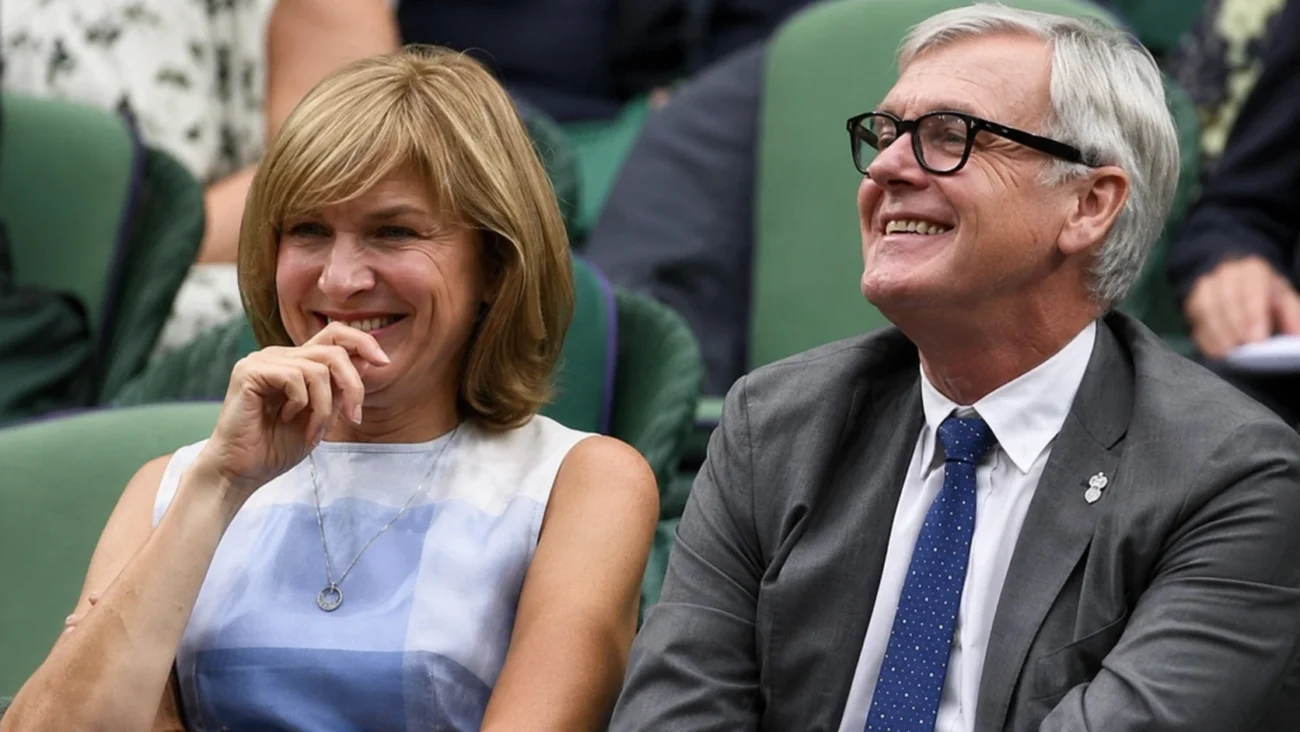
Nigel Sharrocks is the kind of media figure many people recognize only indirectly. His name often appears in searches because of his marriage to BBC presenter Fiona Bruce, but that framing misses most of the story. Long before he became a recurring footnote in articles about Bruce, Sharrocks had built a high-level career across British advertising, film distribution, cinema advertising, audience measurement, and data-led marketing. His professional record helps explain why he still matters in UK media circles, even though he has rarely sought a public-facing profile.
The simplest answer is this: Nigel Sharrocks is a British media and advertising executive, born in 1956, who has held senior roles at Grey Advertising, MediaCom, Warner Bros. Pictures UK, Aegis Media, Digital Cinema Media, Barb, and Silverbullet Data Services Group. Companies House lists active appointments connected with Electric House Group, Silver Bullet Data Services Group, Barb Audiences, and Digital Cinema Media, while also recording past directorships across Aegis-related and media companies. Public records list his date of birth as August 1956 and identify him as British, resident in the United Kingdom. Company Information Service.
But here’s the thing. The reason “Nigel Sharrocks” is a useful search topic is not just that he has famous family connections or a long résumé. His career runs through several shifts that changed British media: the growth of specialist media agencies, the rise of global media-buying networks, the blockbuster film-distribution era, the digital rebuild of cinema advertising, and the current fight over trusted viewing data. Understanding Sharrocks means understanding a business career built mostly behind the camera, behind the screen, and behind the numbers.
That makes his profile unusual. He is neither a celebrity executive in the modern social-media sense nor an anonymous board director whose work is impossible to trace. He sits somewhere between those categories: well known in the media trade, relatively private in public life, and repeatedly attached to companies that shape what advertisers buy, what cinemas sell, and how the television industry measures attention. That mix explains both the curiosity and the confusion around his name.
Who Is Nigel Sharrocks?
Nigel Sharrocks is best described as a senior British media executive whose career bridges advertising agencies, film distribution, media buying, cinema advertising, and audience measurement. Silverbullet’s investor material says he has spent more than 40 years in the global media industry and cites roles including chair posts and his part in the Aegis Group sale to Dentsu. That same profile says he previously served as Managing Director for Warner Bros. Pictures UK and founded MediaCom Group Limited, a company that later became part of the wider WPP story.
The public record also shows a long trail of corporate appointments rather than a career built around personal branding. Companies House lists 35 appointments under his name, including active directorships and many resigned or dissolved company roles from earlier phases of his career. These entries do not tell the whole story, because Companies House records appointments rather than performance or influence. They do, however, give a useful factual backbone for separating verified career details from recycled online claims. Company Information Service
Sharrocks is also widely known as the husband of Fiona Bruce, one of the BBC’s most recognizable presenters. A Guardian report from 2004 identified him as married to Bruce when covering his move from Warner Bros. Pictures UK to Aegis Media, and a 2021 PA report said Bruce shares two children with him. That family connection is real, but it should not be treated as the main explanation for his public significance.
The more accurate view is that Sharrocks built a business career before most readers encountered his name in entertainment or television coverage. He was already moving between senior posts in major advertising and film businesses by the 1990s and early 2000s. His later board work kept him close to the infrastructure of media rather than the glamour of it. That is why a serious profile has to follow both paths: the private figure married to a public broadcaster, and the media operator whose work sits inside the commercial machinery of British culture.
Why People Search for Nigel Sharrocks
Most readers who search for Nigel Sharrocks are trying to answer one of three questions. They want to know who Fiona Bruce’s husband is, what Sharrocks actually does for a living, or whether viral claims about his political or advertising connections are true. That last point matters because his name has appeared in misleading social-media claims about government advertising contracts and Fiona Bruce’s BBC impartiality. Full Fact checked one such claim in 2024 and found it false, saying Sharrocks had left Aegis before the relevant contracts were awarded.
The confusion comes partly from the way media-agency businesses are structured. Senior executives often work for groups that own many subsidiaries, and subsidiaries may later win contracts after an executive has left. That can make online claims sound plausible to people who do not follow corporate timelines closely. Full Fact reported that Sharrocks had been CEO of Aegis Media Global Brands and global CEO of Carat as part of that role, but had stepped down from Aegis during 2013; the government contracts cited in the claim were awarded from 2014 onwards.
There is also ordinary curiosity. Bruce has spent decades on British television, so readers naturally search for her husband, family, and private life. Sharrocks, by contrast, has kept a lower public profile and is more likely to appear in trade publications, Companies House filings, investor biographies, and event programmes than in celebrity interviews. That gap creates a space where thin biographies and unsupported net-worth pages tend to multiply.
A useful article about Nigel Sharrocks should therefore do two things at once. It should answer the family question plainly without invading privacy, and it should explain the career in enough detail for readers to understand why media-industry sources treat him as a serious operator. It should also flag unsupported claims rather than repeat them. The search intent may begin with curiosity, but the responsible answer depends on evidence.
Early Career in British Advertising
Sharrocks’ career can be traced through some of the key names in late twentieth-century British advertising. In December 1990, The Media Leader reported that Nigel Sharrocks, then media director at BMP DDB Needham, had been appointed executive media director of the Grey Group and deputy managing director of Grey Advertising from the new year. That short item places him inside a period when media departments were gaining more strategic power inside agency groups.
The move matters because the media side of advertising was changing. Media planning and buying were no longer just back-office functions that placed ads after creative work was finished. They were becoming central to strategy, budget control, audience insight, and client relationships. A senior media appointment at Grey in 1990 was therefore part of a wider industry shift, not just a line on a CV.
Later accounts connect Sharrocks to MediaCom, the media agency that grew out of Grey’s media operations. Digital Cinema Media’s 2013 announcement described him as a former managing director of Grey Advertising and chairman of MediaCom, calling MediaCom a company he launched in the early 1990s. Silverbullet’s investor biography also says he founded MediaCom Group Limited, which later became a major WPP-related media business.
That period helps explain his later career. Sharrocks did not come into film and media buying as an outsider with only financial skills. He came from the discipline of audience planning, client service, agency leadership, and commercial negotiation. Those skills transfer easily across advertising, cinema, television measurement, and digital media because each business depends on matching audiences, money, timing, and trust.
From Grey and MediaCom to Warner Bros. Pictures UK
The next major turn in Sharrocks’ career was his move into film. Companies House records show him appointed as a director of Warner Bros. Entertainment UK Limited on 11 May 1999 and resigning on 25 June 2004. The same public record also shows a parallel appointment at Filmbank Distributors Limited during the same 1999 to 2004 period, which fits the wider film-distribution phase of his career. Company Information Service
The Guardian described Sharrocks in April 2004 as the UK boss of Warner Brothers Pictures, identifying Warner at the time with major film properties including Harry Potter and Lord of the Rings. That article said his move to Aegis marked a return to advertising after five years at Warner, and it credited him with past work as managing director of Grey Advertising and a role in creating MediaCom. It also reported that his Warner role involved responsibility for releasing around 25 films a year. The Guardian
Digital Cinema Media later said that after joining Warner Bros. in 1999, Sharrocks oversaw the release of more than 150 movies, including Harry Potter and Matrix franchise titles. That figure is a company statement from a 2013 appointment announcement, so it should be read as an official biography rather than as independent analysis. Even so, it fits the broad public timeline and explains why his film experience became valuable when he later chaired a cinema advertising business. Digital Cinema Media
Film distribution is a different world from agency media buying, but it rewards some of the same instincts. A distributor has to understand audiences, release windows, cinema chains, marketing spend, press timing, and the emotional life of popular culture. Advertising agencies think about how to get attention; film distributors think about how to turn attention into attendance. Sharrocks’ move between those worlds gave him a broader commercial lens than many executives who remain in one channel.
The Aegis Years
In 2004, Sharrocks returned to advertising through one of the biggest media-buying groups in the UK. The Guardian reported that he would become chief executive of Aegis Media in the UK and Ireland, with responsibility for media businesses including Carat, Vizeum, and Posterscope. The appointment came after a period of senior management changes at Aegis, which made the job a high-pressure leadership move rather than a quiet transfer.
Aegis mattered because media buying was becoming more global, more data-heavy, and more central to the economics of advertising. Carat and Vizeum were not just agency brands; they were part of a system that helped advertisers decide where billions in marketing spend should go. Posterscope brought out-of-home advertising into that mix, adding another channel where audience location and measurement were critical. A leader in that environment had to manage clients, agency cultures, and the growing push toward digital capability.
By 2013, Sharrocks was CEO of Aegis Media Global Brands, according to The Drum’s report on his retirement from the group. The Drum said he would step down at the end of summer 2013 after nine years with Aegis, having joined from Warner Bros. Pictures where he had been managing director. The article quoted Jerry Buhlmann, CEO of Dentsu Aegis Network and Aegis Media, describing him as a respected figure across Aegis and the advertising industry.
Sharrocks’ own comment in that report framed the timing as a natural point to step aside as Aegis entered its next chapter with Dentsu. He said the business had strengthened in performance, size, capability, and culture during his time there, and that he was proud to have been part of the team that delivered the change. Those comments are corporate departure language, but they still mark a clear endpoint. After Aegis, his public career shifted more toward chairmanships, advisory work, and board roles.
The Dentsu Deal and Why It Matters
The sale of Aegis to Dentsu was one of the defining advertising deals of that period. Dentsu’s own history states that the boards of Dentsu Inc. and Aegis Group announced agreement on a recommended cash offer on 12 July 2012, that Aegis shareholders approved the transaction on 16 August 2012, and that the acquisition was completed on 26 March 2013. The same Dentsu account says the deal created Dentsu Aegis Network Ltd. in London as a new global operating unit.
Silverbullet’s investor biography says Sharrocks was a key member of the executive leadership team that sold Aegis Group to Dentsu in a US$3.16 billion cash deal. That dollar figure appears in Silverbullet’s profile, while other sources often describe the deal in pounds because Aegis was a UK company. The exact currency presentation varies by source, but the significance is clear: the transaction moved Aegis into Dentsu’s global structure and helped reshape the international agency market.
This is one reason Sharrocks’ career is more consequential than a casual celebrity-adjacent biography suggests. Executives involved in major agency networks influence how global brands spend money, how media owners compete for that money, and how digital capability is built or bought. The Dentsu-Aegis deal was not simply a corporate exit; it was part of the consolidation of advertising around large networks with data, technology, and international scale. Sharrocks’ Aegis chapter sits inside that larger shift.
There is also a caution here. Being part of a leadership team in a major sale does not mean one person alone made the deal happen, and good reporting should not inflate individual credit. Corporate transactions are negotiated by boards, advisers, shareholders, and executives across both sides. The accurate point is narrower but still meaningful: public investor material places Sharrocks among the senior figures involved in Aegis at the time of a major global sale.
Digital Cinema Media and the Return to the Big Screen
After leaving Aegis, Sharrocks moved quickly into a board role that combined his advertising and film experience. In September 2013, Digital Cinema Media announced that it had appointed him to the new role of non-executive chairman. The company said his responsibilities would include chairing DCM’s external board, which included senior representatives from leading cinema chains Cineworld, Odeon, and Vue.
DCM is important because cinema advertising occupies a different place from television, social media, or outdoor ads. It sells attention in a room where viewers have chosen to be present, where phones are discouraged, and where the ad appears before a high-emotion entertainment experience. DCM’s current advertising page describes the company as the market leader in UK cinema advertising, providing more than 3,500 screens at more than 500 sites for advertisers. It also says DCM sells 85% of the cinema advertising market through exhibitors including Cineworld, Odeon, Vue, Picturehouse, The Light, Omniplex, and many independent cinemas.
The cinema market has had to recover from pandemic disruption, changing release patterns, and competition from streaming. DCM’s own figures list UK industry admissions at 117 million in 2022, 124 million in 2023, 126.5 million in 2024, and 123.5 million in 2025, with a 2026 forecast of 129.6 million. Its page also lists industry revenue rising from £112 million in 2022 to £132.7 million in 2025, with a 2026 forecast of £139.3 million.
For Sharrocks, DCM was a logical post-executive role. It allowed him to apply film knowledge from Warner Bros. and media-sales knowledge from agency leadership. It also put him in the middle of a sector that still has to argue for its value against digital channels with larger scale and faster reporting. The chair’s job in that context is not to run daily sales, but to bring credibility, governance, relationships, and strategic pressure.
Barb and the Battle for Trusted Viewing Data
Sharrocks’ other major chair role is Barb, the UK audience measurement body. Barb announced in October 2013 that Sharrocks would take over as non-executive chairman, succeeding Nigel Walmsley after 11 years in the role. The announcement said Sharrocks had recently left Aegis Media Global Brands, where he led the Carat, Vizeum, and Posterscope networks, and that he had joined Aegis in 2004 from Warner Bros. Pictures UK.
Barb’s work is less visible to ordinary viewers than a BBC presenter or a film campaign, but it is central to how UK television is valued. Barb describes itself as the industry’s standard for understanding what people watch, using a hybrid approach that combines people-based panel data with census-level online viewing data. It says the method is designed to measure total identified viewing across broadcast, video-on-demand, and video-sharing platforms across devices.
That role has become harder as viewing has moved from scheduled television to streaming apps, connected TVs, phones, tablets, and video platforms. Barb says joint industry currencies exist to provide audience numbers and trading metrics for advertising media, with advertisers, agencies, and media owners working together around a credible trading currency. In plain English, that means Barb helps the industry agree on what was watched, by whom, and in what form, so that programming, advertising, and public-interest decisions are not based only on self-reported platform data.
Sharrocks has remained visibly connected to Barb’s leadership. In March 2026, Barb announced Caroline Baxter as Chief Executive and quoted Nigel Sharrocks as Chair of Barb, saying joint-industry audience measurement provides evidence that supports a healthy media market. The same announcement listed priorities such as extending the use of device data, maintaining a high-quality panel, supporting campaign work through Barb Ads Hub, modernising data distribution, and extending reporting of what people watch.
Silverbullet, Data, and the Privacy-First Ad Market
Sharrocks is also connected with Silverbullet Data Services Group, a business that sits closer to the data and marketing-technology side of the modern ad economy. Companies House lists him as an active director of Silver Bullet Data Services Group PLC, appointed on 16 July 2020. Silverbullet’s board page identifies him as Non-Executive Chairman and says his career includes more than 40 years in global media, MediaCom, Warner Bros. Pictures UK, Aegis, and chair roles across media companies.
This part of his career matters because advertising has been moving away from older tracking models built around third-party cookies and toward first-party data, consent, and privacy-led measurement. Silverbullet’s 2023 annual report framed its business around a “Privacy-First Marketing Era” and listed Nigel Sharrocks as Non-Executive Chairman among its directors. The company reported 2023 revenue of £8.36 million in a public annual-results summary, a 44% increase from the prior year according to that announcement.
A board role in a listed data-services company is different from running a media agency. Non-executive chairs are expected to guide governance, challenge management, support strategy, and represent shareholder interests, not manage day-to-day client work. Sharrocks’ value in that setting comes from his memory of how advertisers, agencies, media owners, and measurement bodies behave when markets change. That kind of experience can be especially useful in a sector where the language changes quickly but the business problem remains familiar: prove that marketing money works.
The Silverbullet chapter also shows why simple labels such as “film boss” or “Fiona Bruce’s husband” are too narrow. Sharrocks has moved from traditional agency media to film distribution, then to media networks, cinema advertising, audience measurement, and data-driven marketing. Those moves track the commercial route of media itself, from mass channels to measured attention and now to privacy-sensitive data. His career is best understood as a long response to where advertising money goes next.
Nigel Sharrocks and Fiona Bruce
Nigel Sharrocks’ marriage to Fiona Bruce is a legitimate part of his public profile, but it is often overused. Bruce is a high-profile BBC presenter known for programmes including news broadcasts, Antiques Roadshow, Fake or Fortune?, and Question Time. Sharrocks has appeared in coverage about her because spouses of prominent broadcasters attract public curiosity, especially when the spouse works in media or advertising. The Guardian identified the couple in 2004, and a 2021 PA report said they have two children, Sam and Mia.
That said, the available public information about their family life is limited, and that is how it should be treated. The 2021 report, based on Bruce’s Good Housekeeping interview, discussed her reflections on work and motherhood and said the couple’s son was born in January 1998 and their daughter in November 2001. Beyond such reported facts, responsible coverage should avoid turning adult children or private family routines into material for speculation.
The marriage also explains why Sharrocks’ professional history has sometimes been pulled into debates about BBC impartiality. Full Fact’s 2024 check is useful because it draws a clear line between a real career history and a false claim. It found that posts saying Bruce’s husband was paid £3.9 million a year to advertise for the Conservative Party were false, and it reported that contracts connected with Carat were awarded after Sharrocks had left Aegis.
This is a good example of why dates matter. A person can once have been CEO of a group connected to a later contract without being paid under that contract or holding the role when it was awarded. The mistake may look small on social media, but it changes the meaning completely. In Sharrocks’ case, the verified timeline undercuts the claim rather than supporting it.
What Is Known About Nigel Sharrocks’ Net Worth?
There is no reliable public source that establishes Nigel Sharrocks’ personal net worth. Many online biography pages attach large estimates to media executives, but those figures are usually unsourced, copied from similar pages, or based on assumptions about job titles. A responsible article should not treat those estimates as fact. The available public record confirms roles, appointments, and some company-level information, not his full personal assets.
Companies House records can show directorships, appointment dates, resignations, and some corporate filings, but they do not provide a complete picture of personal wealth. Investor pages may list a board biography and sometimes director shareholdings, but that still does not include private property, pensions, investments, family assets, or liabilities. A listed-company chair may have shares or fees, but that does not translate into a verified total net worth.
What can be said safely is that Sharrocks has held senior roles in valuable media businesses and remains linked to several corporate boards. That suggests a financially successful career, but “successful” is not the same as a verified number. Readers should be wary of sites that present exact net-worth figures without filings, named sources, or clear methodology. In this case, precision would be misleading unless new documentation becomes available.
The same caution applies to salary. Executive pay at private companies is often not disclosed in a way that lets readers identify one person’s total compensation, especially across old roles. Public-company reports may include board pay in some contexts, but they do not explain a full lifetime earnings picture. The honest answer is less flashy than a made-up estimate, but it is more useful: his wealth is not publicly verifiable from reliable open sources.
Public Image and Industry Reputation
Sharrocks’ public image is unusually quiet for someone with his level of industry experience. Trade coverage tends to describe him through appointments, exits, chair roles, and event appearances rather than personal publicity. In 2024, The Media Leader reported on his appearance at The Media Leader Summit, identifying him as chair of Digital Cinema Media and Barb and focusing on his comments about retaining UK television talent.
At that event, Sharrocks warned that major US-based entertainment and streaming companies were drawing top television executives away from the UK. He argued in favour of the BBC’s role in developing and maintaining homegrown talent, according to The Media Leader’s report. Whether one agrees with that view or not, it shows the kind of issue he now speaks about publicly: institutional strength, talent pipelines, and the future of British media rather than self-promotion.
The 2024 summit programme framed his career as stretching from advertising to movies and from Hollywood to Tokyo. It listed leadership roles from BMP’s media department in the 1980s through the formation of MediaCom, Warner Bros., Dentsu Aegis, Digital Cinema Media, and Barb. Event descriptions are promotional by nature, so they should not be read as independent biography. They do, however, reflect how the UK media trade positions him: as a long-serving senior operator with cross-sector experience.
His industry recognition has also continued. In January 2026, the IPA listed Nigel Sharrocks among six advertising figures being celebrated in its 2026 New Year Honours for service to advertising and raising the reputation of the industry. The IPA’s LinkedIn post said those figures would receive IPA Fellowship or Honorary Fellowship at the IPA President’s Reception, and quoted IPA Director General Paul Bainsfair praising their careers in advertising and media.
Common Misunderstandings About Nigel Sharrocks
The first misunderstanding is that Sharrocks is known only because of Fiona Bruce. That is not accurate. His marriage to Bruce is part of why the general public searches for him, but trade and company sources establish a career across advertising, film, cinema media, audience measurement, and data services. His work at Aegis, Warner Bros., DCM, Barb, and Silverbullet would still be relevant in a media-business profile without the family connection.
The second misunderstanding is that every company connected to a later controversy or contract can be treated as his current employer. This is the mistake behind some social-media claims about government advertising money. Full Fact found the claim that he was paid £3.9 million a year to advertise for the Conservative Party was false, and explained that he had left Aegis before the cited contracts were awarded.
The third misunderstanding is that a Companies House appointment equals operational control. A director can be executive, non-executive, advisory in practice, or part of a governance structure, depending on the company and role. Companies House shows legal appointments, but readers need company announcements and investor materials to understand what the role actually involved. That distinction is especially important for someone like Sharrocks, whose later career includes several chair and non-executive positions.
The fourth misunderstanding is that old biographical details always remain current. For example, some investor biographies and aggregator sites continued to describe him as chair of Local Planet, while Companies House records show he resigned as a director of Local Planet International Limited on 28 November 2025. This does not mean every older biography is useless, but it does mean current filings should be checked before presenting a role as active.
Why Nigel Sharrocks Still Matters
Sharrocks still matters because he sits at the junction of media money, measurement, and institutional trust. Those areas may sound less glamorous than television presenting or movie premieres, but they decide how media businesses survive. Advertisers need to know where attention is going, media owners need to prove the value of their audiences, and measurement bodies need enough independence to be trusted by competing sides. His current and recent roles are concentrated exactly in those zones.
Cinema advertising is one example. DCM has to persuade advertisers that cinema still offers valuable attention even as viewers split time among streaming platforms, social feeds, games, and short video. Barb has to help the television and video market compare viewing across old and new forms without letting any single platform mark its own homework. Silverbullet operates in a market where marketers are trying to replace older tracking systems with privacy-conscious data strategies.2
Sharrocks’ career gives him a rare memory bank across all those debates. He has seen agency media grow in power, film marketing ride the blockbuster era, global networks consolidate, cinema advertising digitise, and viewing measurement move beyond linear television. That does not make him the only voice that matters, and it does not mean his views should go unchallenged. It does explain why he remains a relevant figure when industry conferences discuss leadership, talent, and the future of media.
For readers outside the trade, the practical takeaway is simple. Nigel Sharrocks is not a television celebrity, and he is not merely a celebrity spouse. He is a media-business veteran whose career is best understood through the companies and institutions he has helped lead. The more precise the timeline, the clearer the story becomes.
Frequently Asked Questions
Who is Nigel Sharrocks?
Nigel Sharrocks is a British media and advertising executive with a career spanning more than four decades. He has held senior roles connected with Grey Advertising, MediaCom, Warner Bros. Pictures UK, Aegis Media, Digital Cinema Media, Barb, and Silverbullet Data Services Group. Public company and trade sources describe him as a long-serving industry figure with experience across agencies, film distribution, cinema advertising, audience measurement, and data-led marketing.
Is Nigel Sharrocks married to Fiona Bruce?
Yes, Nigel Sharrocks is married to BBC presenter Fiona Bruce. A Guardian report from 2004 identified him as her husband, and a 2021 PA report said Bruce shares two children with him. The couple’s family life is generally kept private, so responsible coverage should stick to verified public information rather than speculation.
What companies is Nigel Sharrocks connected with now?
Companies House records list active appointments for Nigel Sharrocks at Electric House Group Limited, Silver Bullet Data Services Group PLC, Barb Audiences Limited, and Digital Cinema Media Limited. Barb’s March 2026 announcement also identifies him as Chair of Barb. Records also show some former appointments, including Local Planet International Limited, where Companies House lists his resignation as a director on 28 November 2025.
Did Nigel Sharrocks work for Warner Bros.?
Yes, Sharrocks worked at Warner Bros. Pictures UK. Companies House records show he was appointed a director of Warner Bros. Entertainment UK Limited in May 1999 and resigned in June 2004. The Guardian described him in 2004 as the UK boss of Warner Brothers Pictures before his move to Aegis Media.
Was Nigel Sharrocks involved in the Aegis sale to Dentsu?
Silverbullet’s investor biography says Sharrocks was a key member of the executive leadership team that sold Aegis Group to Dentsu. Dentsu’s own history says the Aegis acquisition was announced in July 2012, approved by shareholders in August 2012, and completed on 26 March 2013. It is safest to describe him as one of the senior Aegis figures involved in that period rather than as the sole driver of the transaction.
What is Nigel Sharrocks’ net worth?
There is no reliable public source that confirms Nigel Sharrocks’ net worth. Public records show company appointments and some business connections, but they do not reveal a complete personal wealth figure. Online pages that give exact estimates without filings, named sources, or clear methods should be treated with caution.
Were claims about Nigel Sharrocks and Conservative advertising contracts true?
No, the specific viral claim checked by Full Fact was false. Full Fact reported that Sharrocks had once been CEO of a company group later linked to government advertising work, but he had left before the contracts cited in the claim were awarded. The fact-check also quoted a BBC statement saying he had never donated to the Conservative Party and was not CEO of Carat Global Management Ltd.
Conclusion
Nigel Sharrocks is easiest to misunderstand when his name is reduced to one label. “Fiona Bruce’s husband” is true, but it is not enough. “Media executive” is also true, but it needs a timeline to mean anything. The fuller picture is of a British advertising and media figure whose career has moved through several of the businesses that decide how audiences are reached and valued.
His work connects old and new media more closely than it may first appear. Grey and MediaCom point to the rise of agency media power, Warner Bros. points to blockbuster-era film marketing, Aegis points to global consolidation, DCM points to cinema’s fight for advertiser attention, and Barb points to the search for trusted measurement. Silverbullet adds the newer question of privacy-first data and marketing technology.
The most useful way to read his career is through evidence, not assumption. Verified filings, company announcements, trade reports, and fact-checks tell a clearer story than celebrity summaries or net-worth guesses. They show a private public figure whose influence has been exercised mostly through boardrooms, agencies, cinemas, and measurement systems.
That is why Nigel Sharrocks remains a search topic worth treating seriously. His name may surface because of family curiosity, but the stronger story is about how British media sells attention, measures audiences, and adapts when the business model changes. Readers looking for the truth should start with the timeline and stay alert to claims that skip the dates.
