
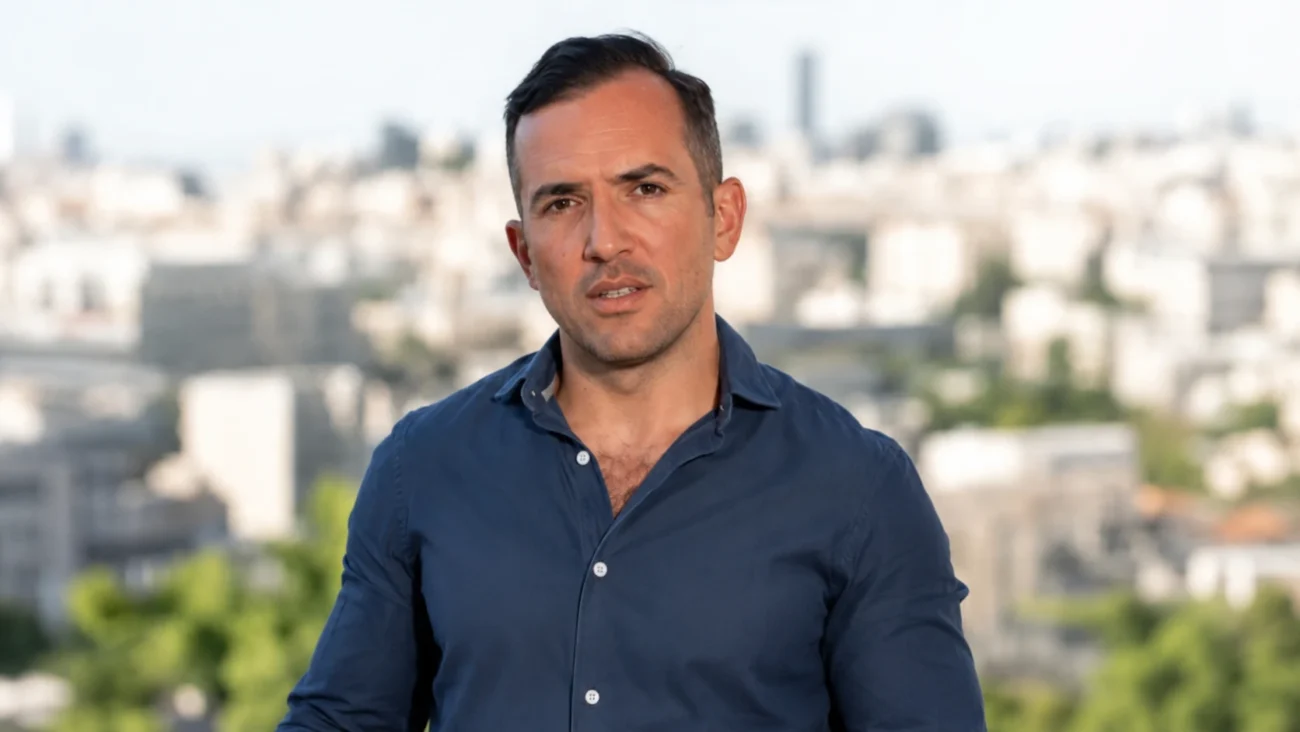
Hugo Bachega became familiar to many viewers through a moment no journalist would want to experience on live television. While reporting for the BBC from Kyiv in October 2022, he paused mid-sentence as explosions were heard over Ukraine’s capital, then ducked and moved away as the broadcast returned to the studio. The clip spread quickly because it showed the danger behind the calm voice of a foreign correspondent. But Bachega’s career is larger than that single moment: he is a BBC journalist whose work has taken him through Ukraine, Lebanon, the Middle East, and some of the most difficult stories of recent years.
Who Is Hugo Bachega?
Hugo Bachega is a Brazilian-born British journalist best known for his work as a BBC correspondent. He has reported from major conflict zones and political flashpoints, including Ukraine during Russia’s full-scale invasion and Lebanon during periods of rising tension involving Hezbollah and Israel. His public profile is tied mainly to field reporting rather than studio commentary or media celebrity. That makes him a familiar face to viewers who follow international news, even though he has kept much of his personal life private.
Bachega’s reporting style is calm, careful, and direct. He is the kind of correspondent audiences often notice during breaking news because he is standing close to events that are still unfolding. His work requires explaining fast-moving crises without overstating what is known. That restraint is one reason he has become a trusted presence for many BBC viewers.
Early Life and Background
Publicly available information about Hugo Bachega’s early life is limited. He is widely described as Brazilian-born, and some professional profiles identify him as Brazilian-British. Unlike many public figures, he has not turned his childhood, family, or private biography into part of his public brand. That means responsible writing about him has to separate confirmed background from online guesswork.
What can be said with confidence is that his international background fits the career he later built. Foreign correspondents often work across languages, cultures, and political systems, and Bachega’s career reflects that wider world view. His voice and manner on air suggest the discipline of someone trained to keep facts ahead of emotion. That quality matters in the kind of stories he covers.
Education and Early Career
Details about Bachega’s education have not been clearly confirmed in reliable public sources. Some online profiles say he began his journalism career in Brazil, including early work connected to Reuters in São Paulo. Those claims are plausible and often repeated, but they should be treated carefully unless supported by an official biography or direct interview. What is clear is that he developed the habits associated with international news reporting: speed, accuracy, clean attribution, and caution under pressure.
Early newsroom work often shapes a correspondent more than audiences realize. Reporters learn how to confirm information, write under deadline, and resist the pull of dramatic claims. For someone who later covers war and diplomacy, those habits are not small details. They are the foundation of the job.
Building a Career at the BBC
Bachega’s BBC career brought him into the center of major global stories. He has appeared in BBC television, radio, and online coverage, often reporting from the field rather than from a newsroom desk. His work has covered war, displacement, political crisis, military escalation, and the lives of civilians caught inside events far beyond their control. That kind of assignment requires both physical courage and editorial discipline.
At the BBC, a foreign correspondent is expected to do more than describe a scene. The reporter has to explain what is known, what is disputed, who is making a claim, and why the story matters beyond one location. Bachega’s reports often follow that model, moving from immediate events to the wider political and human context. It is a demanding form of journalism because every word carries weight.
The Kyiv Broadcast That Drew Global Attention
The moment that made many people search for Hugo Bachega happened during a live BBC broadcast from Kyiv on October 10, 2022. As he was reporting, explosions were heard in the city, and Bachega paused before taking cover. The studio quickly moved away from the live shot, and the clip was shared widely across news platforms and social media. It became one of those rare moments when viewers saw the risk of war reporting without any filter.
The incident was striking because Bachega did not dramatize it. His reaction was human, immediate, and professional. He had been explaining a major story, then the danger became part of the report itself. For many viewers, it was a reminder that correspondents in conflict zones are not simply narrating history from a safe distance.
Reporting From Ukraine
Bachega’s work from Ukraine placed him inside one of the defining conflicts of the decade. Russia’s full-scale invasion created a constant stream of military, political, and humanitarian developments. Reporters in Kyiv had to cover missile strikes, civilian casualties, battlefield shifts, diplomatic pressure, and the daily resilience of Ukrainians living under threat. Bachega’s reports helped translate those events for a global audience.
Ukraine reporting is especially difficult because information moves quickly and competing claims can appear within minutes. A responsible correspondent cannot simply repeat what officials say without context. The job is to make clear what has been verified, what remains uncertain, and what each development may mean. Bachega’s work from Kyiv reflected that need for caution in a situation where certainty was often scarce.
Work as a Middle East Correspondent
Bachega has also become closely associated with BBC coverage from the Middle East. He has reported from Lebanon and the wider region during periods of intense political and military tension. This beat demands knowledge of local history, regional power struggles, armed groups, civilian communities, and international diplomacy. It is not a place where simple explanations last very long.
Lebanon, in particular, is one of the more difficult countries to explain to an outside audience. Its politics are shaped by sectarian power-sharing, economic collapse, foreign influence, and the role of Hezbollah as both a political and military force. Reporting from there requires care because every description can be contested. Bachega’s work has often focused on how regional conflict affects ordinary people as well as governments and armed groups.
Covering Hezbollah, Israel, and Lebanon
Bachega’s recent reporting has included stories related to Hezbollah, Israeli strikes, Lebanese civilians, rescue workers, ceasefire tensions, and the Lebanese army. These subjects sit inside one of the most sensitive reporting areas in the world. Every side watches language closely, and every claim can carry political consequences. A correspondent has to report what is happening without becoming a tool for any side’s messaging.
That is easier to say than to do. Armed groups, governments, witnesses, hospitals, and rescue teams may all provide information, but not all information can be treated the same way. The reporter’s task is to attribute clearly and avoid false certainty. In that environment, Bachega’s measured tone is not just a style choice; it is part of the discipline required by the beat.
Reporting Style and Public Image
Hugo Bachega’s public image is built on seriousness rather than personality. He does not appear to court attention outside his work, and he has not made himself the focus of the stories he covers. Viewers tend to know him through field reports, live updates, and written BBC coverage. That gives his profile a different shape from presenters whose public life is part of their appeal.
His on-air presence is controlled but not cold. He explains events in plain language and usually avoids loaded phrasing. In conflict reporting, that matters because audiences are often frightened, angry, or confused. A correspondent who can slow the pace without losing urgency gives viewers something valuable: a clearer way to understand what is happening.
Personal Life, Wife, and Family
Reliable public information about Hugo Bachega’s personal life is very limited. There is no confirmed public record of his wife, partner, children, or detailed family background. That absence should not be filled with speculation. For a journalist whose work is public but whose private life is not, restraint is the honest approach.
Many readers search for personal details because they have seen Bachega during dramatic news coverage and want to know more about the person behind the report. That curiosity is natural, but it does not create verified facts. Unless Bachega chooses to share more about his family life, the most accurate answer is that those details are not publicly confirmed. His professional record remains the strongest basis for understanding him.
Age, Nationality, and Identity
Bachega is generally described as Brazilian-born and British. His exact date of birth and age are not confirmed in strong public sources. Some websites may offer estimates, but estimates should not be treated as fact. In a serious profile, it is better to leave a detail open than to publish a number that may be wrong.
His nationality and background interest many viewers because his voice and reporting career reflect an international path. That curiosity is understandable, especially for a BBC journalist working across several regions. Still, identity should not overshadow the work. Bachega’s reputation comes from his reporting, not from biographical trivia.
Net Worth and Income Sources
There is no credible public figure for Hugo Bachega’s net worth. As a BBC correspondent, his income would likely come from journalism work, including reporting, broadcasting, and related professional duties. But exact salary details and private financial information are not publicly available. Any website claiming a precise net worth should be treated with caution unless it provides verifiable evidence.
This is a common problem with online profiles of journalists. Search demand encourages sites to invent or repeat financial estimates even when no reliable data exists. In Bachega’s case, the honest answer is simple: his career is public, but his finances are private. A careful biography should not pretend otherwise.
Challenges and Criticism
Any correspondent covering Ukraine, Lebanon, Israel, Hezbollah, or the wider Middle East works in a highly charged environment. Viewers, advocacy groups, governments, and communities often challenge wording, framing, sourcing, and emphasis. That scrutiny can be intense because the stories involve death, displacement, national security, and deep historical grievances. Bachega’s reporting exists inside that pressure.
Criticism of conflict coverage does not automatically prove bias, but it should be taken seriously when it points to facts, omissions, or unclear language. Good journalism is not above challenge. At the same time, deadline reporting from unstable places is rarely able to satisfy every audience. The best measure is whether the work is clearly sourced, fairly framed, and honest about uncertainty.
Why Hugo Bachega Matters
Bachega matters because foreign correspondents still shape how millions of people understand wars they cannot see for themselves. His reports help connect distant events to human consequences, policy choices, and regional risks. In Ukraine, that meant explaining an invasion that reshaped European security. In Lebanon and the Middle East, it has meant reporting on conflicts where local events can quickly become regional crises.
The value of this work is easy to overlook until a major story breaks. Then audiences rely on correspondents who can stand near events, gather information, and explain what is known without turning confusion into performance. Bachega’s career shows why field reporting remains essential even in an age of social media clips and instant claims. Being present still matters.
Where Hugo Bachega Is Now
Hugo Bachega continues to be known for his work as a BBC correspondent covering international affairs, especially from the Middle East. His recent public profile is tied to reporting from Lebanon and the wider region. Like many foreign correspondents, his location and assignments can change depending on the news cycle. That is part of the job’s nature.
What seems consistent is the kind of work he does. Bachega is assigned to stories where politics, violence, and civilian life intersect. He is not simply reading headlines; he is often reporting from places where those headlines are being formed. That is why his name continues to draw interest from viewers who want to know more about the reporter behind the live shot.
Frequently Asked Questions
Who is Hugo Bachega?
Hugo Bachega is a Brazilian-born British journalist and BBC correspondent. He is best known for reporting from conflict zones and major international stories, including Ukraine and the Middle East. His public reputation is based on field reporting rather than celebrity or personal publicity.
Many viewers first became aware of him after a live BBC broadcast from Kyiv was interrupted by explosions in October 2022. That moment brought wider attention to his name, but it was only one part of a larger reporting career. He has continued to cover major stories involving war, politics, and regional security.
What nationality is Hugo Bachega?
Hugo Bachega is widely described as Brazilian-born and British. This background is often mentioned in professional summaries of his career. It also helps explain why some viewers search for his nationality after hearing him on BBC broadcasts.
His international background fits the kind of reporting he does. Correspondents covering global affairs often work across cultures, languages, and political systems. In Bachega’s case, his identity is part of the public interest, but his work remains the central fact.
What happened to Hugo Bachega in Kyiv?
In October 2022, Bachega was reporting live from Kyiv for the BBC when explosions were heard in the Ukrainian capital. He paused, looked upward, and moved away as the broadcast returned to the studio. The clip spread widely because it captured the danger surrounding live war reporting.
The incident happened during a period of Russian attacks on Ukrainian cities. For viewers, the moment showed that foreign correspondents often work close to real danger. It also made Bachega’s name more recognizable to people who follow international news.
Is Hugo Bachega married?
There is no reliable public information confirming whether Hugo Bachega is married. Details about his wife, partner, children, or private family life have not been clearly confirmed by strong sources. A responsible profile should not invent those details.
This privacy is not unusual for foreign correspondents. Many journalists have public careers while keeping their personal lives separate. Bachega appears to fall into that category.
How old is Hugo Bachega?
Hugo Bachega’s exact age is not confirmed in reliable public sources. Some online pages may offer estimates, but those figures should not be treated as verified facts. Without a confirmed date of birth, any exact age claim would be speculative.
The stronger public record concerns his journalism career. His nationality, BBC role, and reporting assignments are much better documented than his private biographical details. That is why serious profiles should avoid guessing.
What is Hugo Bachega’s net worth?
Hugo Bachega’s net worth is not publicly confirmed. As a BBC correspondent, his income likely comes from journalism and broadcasting work, but exact salary and financial details are private. Claims of a specific net worth should be viewed carefully.
Many online biography sites publish estimated net worth figures for public professionals without clear evidence. In Bachega’s case, there is no strong basis for a precise figure. The honest answer is that his finances are not part of the verified public record.
Where does Hugo Bachega work now?
Hugo Bachega works as a BBC correspondent and is strongly associated with Middle East reporting. He has reported from Lebanon and other locations tied to major regional stories. His assignments may change as international news develops.
Foreign correspondents often move between cities and countries depending on events. For that reason, any location should be understood as assignment-based rather than permanent. His public role remains centered on field reporting for the BBC.
Conclusion
Hugo Bachega’s biography is not built around fame in the usual sense. It is built around work: reporting from dangerous places, explaining hard stories, and staying careful when events move faster than confirmed facts. That is why audiences remember him not only as the reporter who ducked during explosions in Kyiv, but as a journalist whose career has been shaped by high-pressure assignments.
There is still much about Bachega’s private life that is not publicly known. His family, age, relationships, and finances remain largely outside the verified record. Rather than treating that as a mystery to solve, it is better to see it as a boundary. The public story is his journalism.
His place in modern news comes from the value of being on the ground. At a time when conflict is often filtered through opinion, propaganda, and short social clips, correspondents like Bachega still provide something harder to replace. They bring reporting from the scene, careful language, and a human presence in places where history is being made.
